
In an era where education is being reinvented, the term “Classroom 60x” is gaining ground in academic and technology discussions. It proposes a new paradigm: classrooms that are not just smart, but scalable, interactive, and adaptive. Rather than being constrained by traditional walls, “60x” suggests multiplying the reach, engagement, and effectiveness of learning by leveraging technology, pedagogy, and space design.
This article explores the concept, components, benefits, hurdles, and possible futures of Classroom 60x — helping educators, administrators, and learners understand how it could reshape education.
What Does “Classroom 60x” Mean?

Though not yet standardized, “Classroom 60x” is often described as:
- A technology-enhanced learning environment that amplifies a teacher’s reach and student engagement by a factor (symbolized by “60x”)
- A framework combining interactive tools, flexible layouts, and pedagogy to make learning more immersive and scalable
- A hybrid model that blends in-person and remote learning, enabling broader access and adaptability
In essence, Classroom 60x is a vision — imagining what classrooms can become when optimized with modern tools and design.
Key Components & Features
To realize the Classroom 60x model, several features tend to be central:
1. Interactive & Immersive Technology
- Smart boards or interactive displays responsive to touch, gestures, and pen input
- AR/VR experiences for subjects like science, history, or geography
- Multimedia, simulations, and educational games integrated into lessons
2. Flexible Physical Layouts
- Modular furniture that can be re-arranged for group work, circles, or labs
- Zones for collaboration, quiet study, and presentation
- Clear sight lines and mobility for teachers to interact with students one-to-one
3. Real-Time Data & Feedback
- Integrated assessment tools that give live feedback to students
- Dashboards showing progress, engagement, and areas needing support
- Analytics to guide instructional adjustment on the fly
4. Cloud & Device Connectivity
- Cloud-based resources accessible anytime, anywhere
- Student devices (laptops, tablets) seamlessly synced with class content
- Integration with learning management systems and content libraries
5. Hybrid / Remote Access Capability
- Streaming lectures or hybrid sessions so students can join remotely
- Recorded lessons, archives, and asynchronous access
- Tools for remote participation and breakout group collaboration
Benefits of Classroom 60x
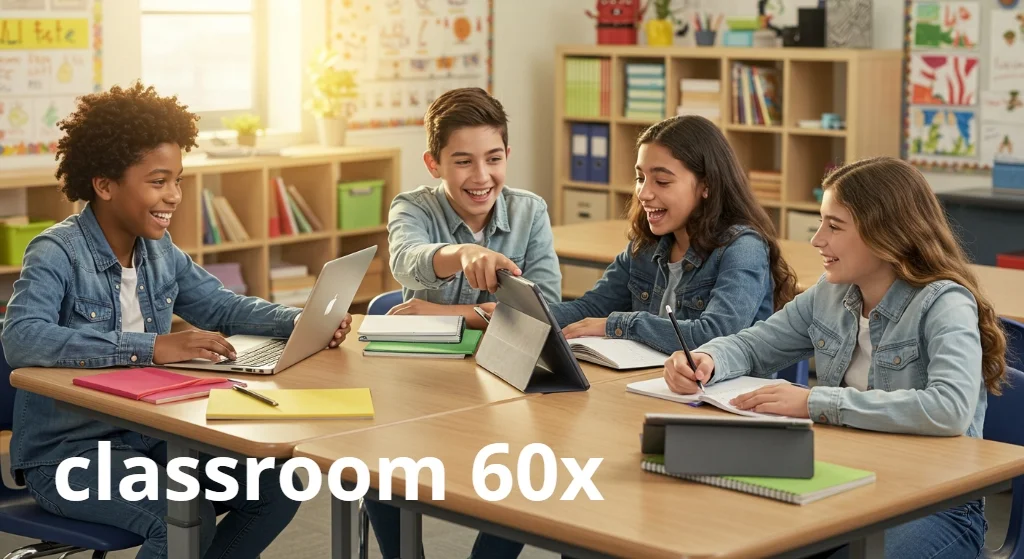
Adopting a 60x model brings several notable advantages:
- Greater Engagement: Interactive content, games, simulations, and multimedia can captivate more students.
- Scalable Reach: Teachers can involve more learners, across physical and remote settings.
- Personalized Learning: With real-time data, instruction can adapt to individual pace and needs.
- Resource Efficiency: Shared digital resources reduce repeated printing and physical constraints.
- Collaboration & Creativity: Flexible layouts and group activities foster peer learning and innovation.
Challenges and Considerations
No model is perfect. Implementing Classroom 60x also involves challenges:
- Cost & Infrastructure: Supplies, displays, AR/VR hardware, and connectivity can be expensive.
- Teacher Training: Educators need support to master new tools and pedagogical shifts.
- Equity & Access: Students without devices or stable Internet may fall behind.
- Technical Issues: Maintenance, software bugs, outages, and compatibility problems must be managed.
- Human Element: Too much tech can dilute teacher–student personal connection if not balanced well.
How Classroom 60x Compares to Traditional Classrooms
| Aspect | Traditional Classroom | Classroom 60x |
|---|---|---|
| Mode of Teaching | Lecture, chalkboard, limited interactivity | Multimedia, interactive, student-driven |
| Flexibility | Fixed desks, fixed layout | Modular furniture, reconfigurable space |
| Student Feedback | Periodic tests, delayed feedback | Real-time assessments and dashboards |
| Accessibility | Students physically present only | Remote/hybrid access possible |
| Resource Use | Printed materials, isolated resources | Cloud resources, shared digital access |
Case Use & Implementations

Although still emerging, Classroom 60x is being trialed in:
- K–12 schools experimenting with mixed reality science classes
- Universities offering hybrid seminars with remote participation
- Corporate training centers applying the model for large workshops and onboarding programs
- STEM labs where modular layouts and AR tools help teach coding, robotics, or design
These pilots help refine the model and test its feasibility in real-world settings.
Steps to Implement Classroom 60x
To transition toward the 60x model, institutions might follow:
- Needs Assessment: Evaluate current infrastructure, gaps, and goals.
- Pilot Programs: Start with one subject or grade to test tech and layout changes.
- Teacher Training & Support: Provide ongoing professional development.
- Infrastructure Upgrades: Invest in reliable network, displays, and devices.
- Iterative Feedback Loops: Use data and teacher/student feedback to adjust design.
- Scaling Up: Expand to more classrooms, courses, or grades gradually.
Future Outlook
Looking ahead, Classroom 60x may evolve in several directions:
- AI-driven adaptive classrooms that adjust pacing automatically
- Virtual reality field trips replacing static lectures
- Cross-school collaborative classrooms, connecting students globally
- Gamified full-curriculum models where learning feels more game-like
- Inclusive design ensuring that all learners, regardless of background, benefit from the model
Ultimately, Classroom 60x is not just a technology upgrade—it’s a philosophical shift toward more learner-centric, scalable, and dynamic education.
Read: Doge Software Licenses Audit HUD
Read: Sqrwomensrestroom
Read: Eminem’s Wife
Read: Alicia Crowder
Read: Nate Bargatze Wife
Read: AnonIBs
Conclusion
Classroom 60x represents the future of learning spaces—where interactivity, adaptability, and scalability converge. While challenges remain, the potential to transform how students engage, how teachers teach, and how knowledge is shared is significant.
As technology matures and educational systems adapt, Classroom 60x may become a standard model—not just a buzzword. The key will be balancing human connection with digital empowerment, ensuring that every learner can thrive in this next-generation environment.