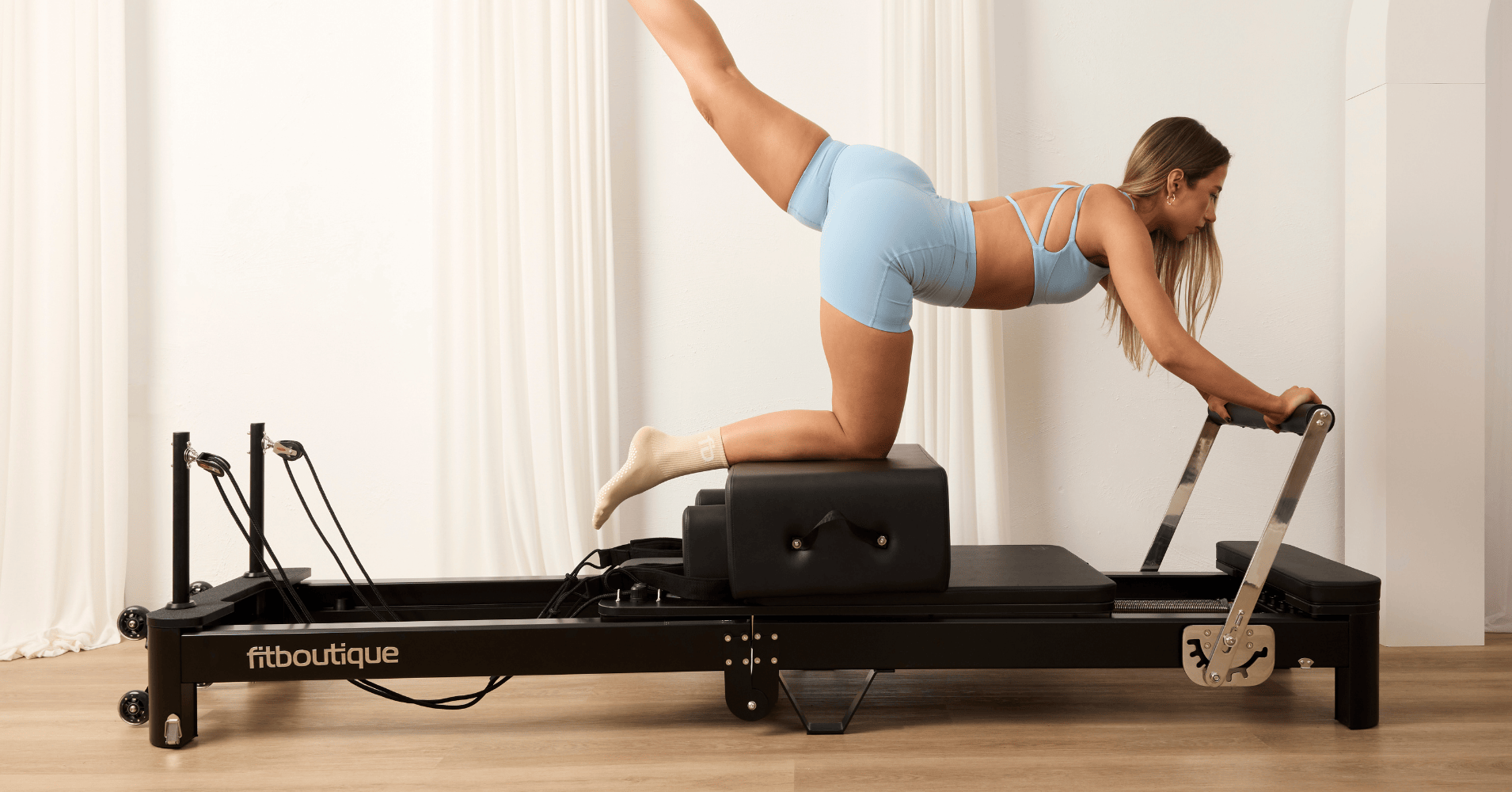
A pilates reformer is a specialised exercise platform designed to support controlled movement, progressive resistance, and structured full-body conditioning. Unlike many conventional fitness machines that isolate individual muscles, the pilates reformer allows the body to move through coordinated patterns that develop strength, flexibility, balance, and postural control at the same time. As more people look for effective training options outside traditional gym settings, the pilates reformer has become increasingly relevant for home users, studio clients, rehabilitation environments, and fitness professionals. Its value comes from its ability to provide both support and challenge, depending on how the equipment is adjusted and how each exercise is performed. Choosing the right pilates reformer requires more than comparing price or appearance. Frame design, carriage quality, spring resistance, adjustability, available space, user experience, and long-term durability all influence whether a model is suitable. This guide explains how the equipment works, what features matter, and how to assess different options before making a purchase.
What Is A Pilates Reformer?
A pilates reformer is a resistance-based training apparatus built around a sliding carriage that travels along a frame. The user performs exercises while lying, sitting, kneeling, standing, or using the straps, depending on the movement being completed. Resistance is usually created by springs, which can be adjusted to make an exercise lighter, heavier, more supportive, or more demanding. This adjustability is one of the main reasons the pilates reformer is used across many ability levels. A beginner may use lighter resistance and supported movements to learn control, while an experienced user may apply stronger resistance, smaller points of contact, or more advanced positions to increase difficulty. The equipment is commonly used for core conditioning, strength development, mobility training, injury rehabilitation, athletic performance, and general movement improvement. Because the carriage moves, users must maintain stability throughout each exercise, which encourages precise control rather than uncontrolled force.
Main Components Of A Pilates Reformer
Although models vary in size, construction, and accessories, most pilates reformer designs include several core parts that determine how the equipment functions. The carriage is the moving platform on which the user sits, lies, kneels, or stands. It moves along rails and is connected to resistance springs. A smooth carriage is essential because uneven motion can affect technique, comfort, and exercise quality. The frame supports the entire system. Stronger frames generally provide better stability, especially during standing work or higher-resistance exercises. Rails guide the carriage and should allow consistent movement without wobbling, sticking, or excessive noise. Springs provide adjustable resistance. Different spring combinations allow users to change the intensity of an exercise. A good pilates reformer should offer enough variation to support beginners, intermediate users, and advanced training progressions. The footbar is used for many lower-body exercises, including pressing movements, bridging variations, and supported transitions. Adjustable footbar positions can improve comfort and allow better alignment for users of different heights. Shoulder blocks help position the body during carriage movement, particularly when lying down. The headrest supports the neck and head, and adjustable positions can improve spinal alignment during certain exercises. Straps and pulleys allow the arms and legs to work against spring resistance. These components make the pilates reformer highly versatile because they support upper-body, lower-body, and integrated full-body movements.
How A Pilates Reformer Works
A pilates reformer operates through controlled resistance and carriage movement. When the user pushes against the footbar or pulls through the straps, the carriage moves away from the spring anchor point. The springs then create resistance as the carriage travels and as it returns. This resistance differs from many weight machines because it is not purely gravity-based. The spring tension encourages continuous control across the full range of motion. Users must manage both the outward and return phases of an exercise, which helps improve coordination and muscular control. The moving carriage also creates a stability requirement. Even simple exercises can require deep core engagement because the body must remain aligned while the carriage shifts. This makes the pilates reformer effective for training control, posture, balance, and efficient movement patterns.
Benefits Of Training With A Pilates Reformer
A pilates reformer offers several practical benefits for users seeking structured and sustainable exercise. First, it supports whole-body conditioning. Many exercises involve the legs, arms, trunk, and stabilising muscles at the same time. This encourages balanced development rather than overloading one area while neglecting another. Second, it can improve core strength. The carriage and spring resistance require the user to stabilise the spine and pelvis throughout movement. This does not only target the abdominal muscles; it also involves deeper stabilisers that contribute to posture and controlled movement. Third, it can assist flexibility and mobility. Many exercises lengthen muscles under resistance, which may help develop strength through a broader range of motion. This is useful for people who want mobility improvements without relying only on passive stretching. Fourth, the pilates reformer is generally low impact. Because many exercises are performed with body support, the equipment may reduce unnecessary stress on joints compared with high-impact training methods. This makes it suitable for a wide range of users when exercises are selected appropriately. Finally, it provides clear progression. Resistance, body position, range of motion, tempo, and exercise complexity can all be adjusted. This allows training to remain relevant as strength, coordination, and confidence improve.
Common Types Of Pilates Reformers
Different pilates reformer models are designed for different settings. Understanding the main categories helps narrow the selection.
- Studio reformers are built for frequent use in professional environments. They usually have strong frames, smooth carriage systems, broader adjustability, and durable materials. These models are often suited to instructors, clinics, and users who want commercial-grade equipment.
- Home models are intended for personal use. They often balance function, comfort, cost, and size. A quality home pilates reformer should still feel stable, move smoothly, and provide enough spring options for ongoing progression.
- Foldable designs are useful where storage space is limited. These models can be stored vertically or folded away after use, depending on their design. While convenient, buyers should still assess stability, ease of folding, and carriage performance before purchasing.
- Some models include additional equipment such as boxes, jumpboards, platform extenders, or sitting boxes. Accessories can expand exercise variety, although they are not always necessary for every user.
Key Factors To Consider Before Buying
Selecting a pilates reformer should involve a careful review of practical and performance-related details. Build quality is one of the most important considerations. A stable frame, reliable carriage, strong springs, and durable upholstery all affect the user experience. Poor construction can lead to instability, noise, uneven movement, or faster wear. Resistance options also matter. A limited spring system may restrict progression, while a broader range allows exercises to be adapted for different goals. Users should consider whether the reformer can provide both gentle support and sufficient challenge. Available space must be measured before purchase. The pilates reformer requires room for its full length as well as clearance around the sides and ends. Users also need enough space to get on and off the equipment safely and perform strap-based movements without restriction. User height and weight capacity should also be checked. A reformer that is too short, too narrow, or not rated for the intended user may compromise comfort and performance. Higher load capacity may also indicate stronger construction. Adjustability is another important factor. Footbar positions, rope length, headrest settings, and shoulder block design can all influence whether the equipment suits different body types and exercise styles.
Pilates Reformer Compared With Mat-Based Pilates
Mat Pilates and reformer Pilates share many principles, but they are not identical training experiences. Mat-based work generally relies on body weight, floor contact, and gravity. It can be highly effective, but resistance options are more limited unless props are added. A pilates reformer provides adjustable spring resistance and mechanical support. This allows some exercises to become easier because the springs assist movement, while others become harder because the springs increase load. As a result, the same equipment can support beginners, rehabilitation users, and advanced exercisers. The reformer also allows a wider range of movement patterns. Straps, pulleys, the footbar, and the sliding carriage create options that are not available on a mat alone. For users seeking variety, progression, and precise resistance control, the pilates reformer may offer greater training flexibility.
Installation And Safe Use
A pilates reformer should be placed on a flat, stable surface with adequate clearance. The area should be free from obstacles, loose rugs, and anything that may interfere with carriage travel or strap movement. Before use, all springs, ropes, pulleys, and adjustable parts should be checked. New users should begin with simple exercises and moderate resistance rather than attempting advanced movements immediately. Correct technique is essential because the reformer rewards precision more than speed. Instruction from a qualified professional may be useful, particularly for beginners or users with injuries. Even a small number of guided sessions can help establish correct alignment, safe spring selection, and appropriate exercise progressions.
Maintenance And Long-Term Care
Regular maintenance helps preserve performance and safety. The carriage tracks should be kept clean so movement remains smooth. Springs should be inspected for signs of wear, overstretching, or damage. Straps, ropes, clips, and pulleys should also be checked regularly. Upholstered surfaces should be cleaned according to the manufacturer’s instructions. Bolts and fittings may need periodic tightening, especially if the equipment is moved, folded, or used frequently. A well-maintained pilates reformer can provide many years of use. Neglecting basic maintenance, however, may reduce performance and increase the risk of avoidable equipment issues.
Choosing A Reliable Supplier
The supplier is an important part of the buying decision. Clear product information, warranty terms, replacement parts, delivery support, and after-sales service can make a significant difference over the life of the equipment. Buyers should review specifications carefully rather than relying only on images. Dimensions, materials, spring options, maximum user weight, included accessories, and storage features should all be confirmed. For those comparing dependable equipment options, a suitable pilates reformer can provide a practical foundation for structured home or studio training. The right choice should match the user’s space, ability level, training goals, and expectations for long-term use.
A pilates reformer is more than a piece of exercise equipment. It is a structured training system that supports strength, stability, mobility, and controlled movement. The best model is not always the most expensive or the most compact; it is the one that fits the user’s body, space, goals, and intended frequency of use. Before purchasing, users should assess frame strength, carriage movement, spring range, adjustability, storage needs, accessories, and supplier reliability. Careful selection helps ensure the equipment remains useful as training ability develops over time. When chosen correctly, a pilates reformer can support consistent exercise, precise progression, and a high level of movement quality in both home and professional settings.
Frequently Asked Questions
What is a pilates reformer? A pilates reformer is a resistance-based exercise machine with a sliding carriage, springs, straps, pulleys, and a frame designed for controlled full-body training.
Is a pilates reformer suitable for home use? Yes, a pilates reformer can be suitable for home use when there is enough space, stable flooring, and a model designed for personal training needs.
Can beginners use a pilates reformer? Yes, beginners can use a pilates reformer because spring resistance and exercise difficulty can be adjusted to suit lower experience levels.
How much room is needed for a pilates reformer? A pilates reformer needs enough room for its full frame length plus additional clearance around the equipment for safe movement.
Is a foldable pilates reformer stable? A foldable pilates reformer can be stable if it is well built, although fixed-frame models may provide a more solid feel during demanding exercises.
What muscles does a pilates reformer work? A pilates reformer can train the core, legs, glutes, arms, shoulders, back, and stabilising muscles depending on the exercises performed.
Is a pilates reformer good for mobility? Yes, a pilates reformer can support mobility by combining controlled range of motion with adjustable resistance.
How often should a pilates reformer be used? A pilates reformer is commonly used two to four times per week, depending on the user’s goals, fitness level, and recovery needs.
Does a pilates reformer require maintenance? Yes, a pilates reformer should be cleaned and inspected regularly, including springs, straps, pulleys, rails, and fittings.
What should be checked before buying a pilates reformer? Buyers should check frame quality, carriage smoothness, spring options, dimensions, weight capacity, adjustability, accessories, warranty, and supplier support.