Addressing the Concerns of Modern Parents
Baby safety is the foremost concern for every parent, and feeding routines are often where that concern becomes most visible. After a late-night feeding, many parents rinse bottles quickly at the sink while the baby is crying or waiting to be settled back to sleep. In those rushed moments, it is easy to miss milk film around the nipple, formula residue at the bottom of the bottle, or moisture trapped under small parts. Traditional rinsing, scrubbing, and air-drying can leave parents wondering whether every corner has truly been cleaned. As modern families balance work, rest, and newborn care, they are increasingly looking for smarter solutions that protect babies while saving precious time.
The Importance of Baby Bottle Hygiene
Cleanliness and sanitation are crucial to a baby’s health because improperly cleaned bottles can harbor bacteria, mold, and other harmful pathogens. Even when parents are careful, nipples, caps, valves, and bottle seams can be difficult to clean thoroughly by hand. The problem is not only visible dirt; it is also the residue that stays in narrow curves or the dampness that remains when bottles are placed on a countertop to dry. This is why a reliable sterilizing bottle process has become an important part of everyday baby care, helping parents reduce hygiene risks after each feeding.
Key Features of Bottle Cleaning Products
Today’s baby bottle washers offer complete support by combining washing, sterilizing, drying, and storage at the press of a button. Among the most practical bottle washer features are multi-angle cleaning jets, steam sterilization, heated drying, and enclosed storage that keeps bottles ready for the next feed. Instead of scrubbing each bottle one by one, parents can place bottles, nipples, and small accessories into the machine and let the system handle the repeated steps more consistently. Advanced cleaning designs help reach curved interiors and small parts, while self-cleaning functions make the washer itself easier to maintain.
Understanding Specific Needs for Baby Bottle Care
Every family’s feeding routine is different, so the right cleaner should fit specific needs instead of forcing parents to adjust around the machine. Some households need faster cycles for night feeds or back-to-back pumping sessions, while others need flexible space for different bottle sizes, pacifiers, and pump accessories. For a parent returning to work, the morning routine may include preparing several bottles before daycare, cleaning pump parts, and packing everything within a short window. For twins or multiple babies, bottle washer capacity becomes especially important because parents may need to clean several items at once without repeating cycles.
Example of a High-Quality Bottle Washer
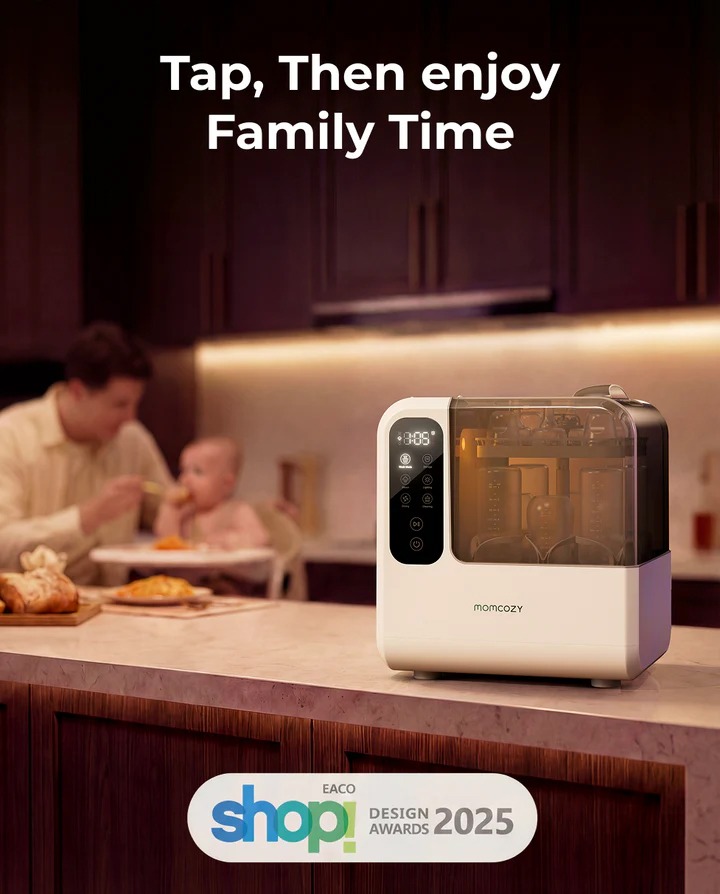
When selecting a bottle cleaner, parents can look at products that work as complete 5-in-1 care stations, covering washing, sterilizing, drying, storing, and self-cleaning. One example is the Momcozy DeepClean Bottle Washer, which uses the Momcozy cleaning system to show how a thoughtful product can support the broader goal of safer and more efficient bottle care, rather than simply adding another appliance to the kitchen. Its one-click self-cleaning function can also help clean the internal system with minimal effort, reducing daily maintenance steps and making the washer easier to keep ready for repeated use. In a real household setting, this means fewer bottles waiting in the sink, fewer separate tools on the counter, and a smoother transition from used bottle to clean, dry, ready-to-use bottle. A patented cleaning mechanism, smooth operation, intuitive controls, and the ability to store sterile bottles can make the routine feel easier from sink to shelf.
The Best Bottle Washer for Your Needs
As parents continue to seek more efficient and hygienic ways to care for their babies, advanced bottle cleaners are leading the shift toward safer everyday feeding. Beyond sterilization, reliable bottle drying after sterilizing also matters because dry, enclosed storage can help keep bottles ready for the next use. For parents, that can mean opening the machine before the next feeding and finding bottles already clean, dry, and organized instead of reaching for a towel or checking whether the inside is still damp. Ultimately, the best bottle cleaner is the one that fits a family’s schedule, space, and feeding habits while delivering convenience, efficiency, and top-level hygiene.