Introduction
The iPhone 15 is prone to overheating during gaming, video editing, and multitasking, which negatively impacts both performance and battery life. Repair procedures often address this issue by upgrading to graphene thermal pads and applying high-quality thermal paste to enhance heat dissipation. Utilizing the tool systems provided by DIYFIXTOOL—such as anti-static tweezers, heat-resistant mats, and the HT-203U infrared thermal imager—professional technicians can precisely pinpoint heat sources and perform repairs safely. This effectively lowers device temperatures while significantly improving overall system stability and user experience.
Understanding iPhone 15 cooling problem
Modern smartphones generate heat at full scale thanks to powerful processors, compact internals, and fast charging designs. The iPhone 15 uses a tight internal design where heat can emerge trapped across the CPU, battery connector location, and logic board protector. When heat is not transferred properly, the device can additionally stifle overall performance or increase to be uncomfortable to place through extended use. This problem becomes more real if customers play mobile games with high overall performance or report long 4K videos.
A cooling device improvement makes it possible to increase the thermal conductivity of the mobile phone. Graphene thermal strips are commonly used because they transfer heat better than bulk insulating materials. Combined with top-quality thermal paste, they make for an excellent path for heat dissipation from the processor to the metal frame. Technicians pretending to upgrade cooling equipment often use a diagnostic system that includes an HT-203U thermal camera to locate temperature-conscious areas before and after regeneration This confirms whether or not the temperature change has effectively lowered the operating temperature within the machine.
Preparation of equipment and work area .
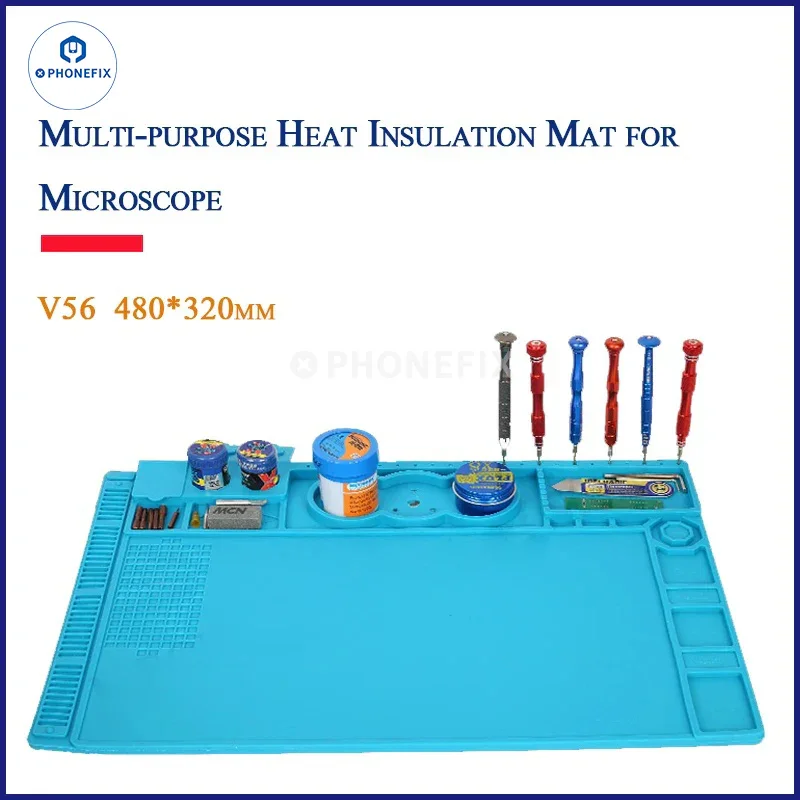
Before opening the iPhone 15, technicians need to assemble a smooth fix-and-release recovery station. The workbench should have proper lighting, magnetic screwdrivers, and safe grounding equipment to protect sensitive electrical connectors. A mechanical thermal insulation pad is especially recommended because it protects the paint floor from excessive heat even if arranged screws and components are held at some level during disassembly.
This technique requires several specialized restorative tools. Precision screwdrivers are needed to open the bottom screws and remove the inner shields. Antistatic tweezers are important because they effectively handle small flex cables and thermal pads where there is an increasing electrostatic discharge on the outside which can damage the motherboard. It is necessary to set the hot air conversion station between 280°C and 320°C for controlled heating when loosening adhesives or removing protective components. Technicians usually use non-clean electricity at some point in motherboard painting, as it improves heat transfer during soldering, also reduces residue build-up Even isopropyl alcohol with at least ninety-nine% purity to clean old thermal paste and adhesive residue needs to be co
Disconnect iPhone 15 securely from
The first step in the repair process is to turn off the device completely. Remove the lower hexagonal screws and perform a gentle heating across the display edges using a hot air station set at approximately 90°C to 100°C The heat softens the waterproof adhesive and introduces a more secure separation of the display assembly. A suction tool and thin plastic starter can then be used to pick out and carefully lift the screen without the external negative internal flex cable. Excessive force should not be used at all, as the iPhone 15 display cables are delicate and luxurious to replace.
Once the display is open, without delay remove the battery connector to save a short circuit during the recovery. Internal metal shields that mask the motherboard connectors can then be removed using a precision screwdriver blade and antistatic tweezers. During disassembly, technicians must carefully align each screw because Apple uses specific screw lengths in specific locations. Incorrect screw placement during reassembly can also damage the motherboard layers. After the desired cables are disconnected, the motherboard area containing the factory thermal steps is available for inspection and options
Disposal of old thermal materials and replacement of graphene pads
After accessing the motherboard, technicians must look at the original thermal material for wear, dryness, or negative touch areas. Old thermal dough often becomes less powerful over the years as repeated heating sessions cause it to dry out and lose its conductivity. Using lint-free plates soaked in isopropyl alcohol, carefully clean the old paste from the processor shield and contact with surfaces This cleaning method should be performed carefully to avoid scratching delicate connections or removing protective coatings from plates
The graphene thermal strip must then be carefully measured and trimmed to make the alleged cooling zone healthy. Proper size is important, as oversized pads can additionally prevent reassembly or create stress points on the connectors. The new heat pad is usually located between the processor shield and the mobile frame to increase heat dissipation efficiency. A thin or even layer of top quality heat paste should additionally be applied to key heat generating areas. Excessive thermal abrasion can reduce performance and spread to nearby additives. Professional technicians usually use antistatic tweezers to place the thermal pad accurately even to prevent contamination from fingerprints or dirty debris
Use of Thermal Images for Temperature Identification and Verification
One of the easiest methods to evaluate thermal integrated performance is the use of thermal imaging equipment during testing. The HT-203U Thermal Imager Camera allows technicians to identify areas of overheating before and after cooling equipment upgrades. The use of gaming apps or benchmarking software can be pressure tested by turning on the device before using the new thermal products. The thermal digital camera will show temperature and concentration points around the processor, charging IC or power management area.
The thermal pad option and thermal paste application need to be repeated and the same pressure tests need to be repeated to test the results. Successful maintenance often shows low peak temperatures and progressive temperature distribution in the phone frame. Technicians should carefully monitor motherboard temperatures during charging and heavy CPU usage. If abnormal temperatures continue to accumulate in one phase, additional inspection may be required for damaged additives or improper heat exposure. The thermal digicam also provides an opportunity to check whether the brand new graphene pad maintains a regular tactile tension after reassembly.
Equipment reassembly and final performance test
Once all the heating is done, the iPhone 15 can be gently reassembled in reverse order. All flex cables shall be securely reconnected before reinstalling protective metal shields. Technicians need to pay attention to the orientation of the plug during magnification to stay away from head pins or loose connections. After reconnecting the battery, turn the device on briefly before the display is completely sealed. This confirms that the touchscreen, camera, audio system, and Face ID functions are working properly.
Before returning the phone completely, a new waterproof adhesive must be applied around the body of the display. Use soft tension to print the display easily. Final test fees overall performance tests, gaming ratings, and temperature monitoring under long-use conditions A successful cooling gadget upgrade often results in improved thermal stability, reduced processor throttling, and improved user comfort through heavy applications Customers generally sound smooth overall performance is also reduced.
Conclusion
The iPhone 15 is prone to overheating under heavy loads, which can compromise its long-term performance. By upgrading to graphene thermal pads and high-performance thermal paste, heat dissipation efficiency can be significantly enhanced. When utilized in conjunction with the DIYFIXTOOL professional repair system, technicians can execute thermal optimization with greater precision. Furthermore, the use of anti-static tweezers, heat-resistant mats, and the HT-203U infrared thermal imager facilitates safe disassembly and accurate temperature monitoring—thereby effectively mitigating heat generation and improving the device’s operational stability.