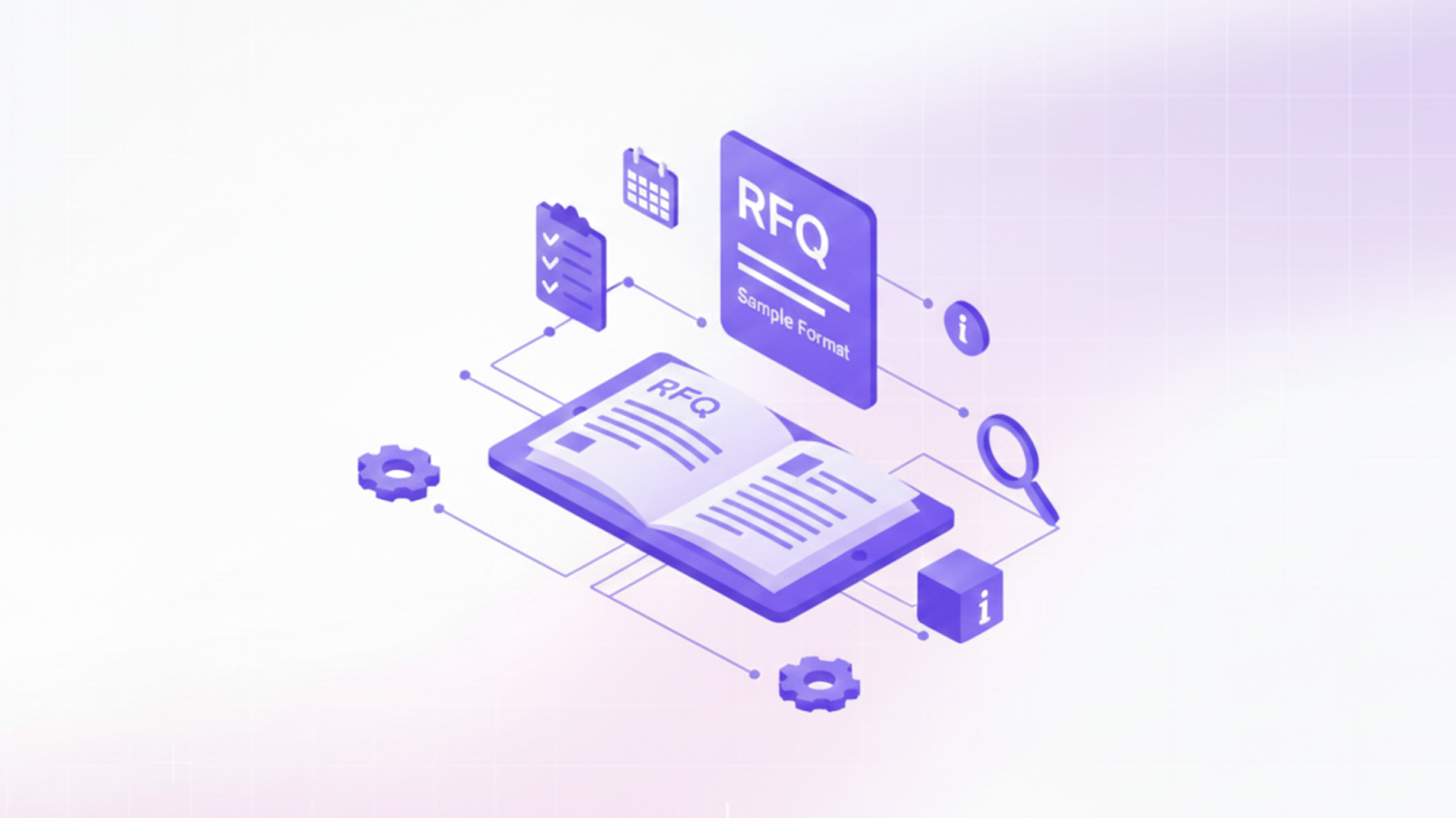
In today’s fast-moving business environment, procurement has evolved far beyond simple price comparison. Enterprises now deal with complex vendor ecosystems, regulatory requirements, and multi-stage evaluation processes. At the center of this system lies one critical artifact-the rfq document.
A Request for Quotation (RFQ) document is not just a formality. It is the structured backbone of procurement decisions, helping organizations collect standardized pricing, evaluate vendors fairly, and ensure transparency in sourcing. However, despite its importance, managing RFQs has become increasingly complex, especially for large enterprises handling multiple suppliers and high-volume procurement cycles.
This complexity has created a growing need for intelligent systems that simplify RFQ creation, response handling, and evaluation. That’s where AI-powered platforms like SiftHub are reshaping the entire workflow.
What Exactly Is an RFQ Document?
An RFQ document is a formal request sent by an organization to suppliers or vendors asking for pricing information on specific products or services. Unlike broader procurement requests such as RFPs (Request for Proposal), RFQs focus primarily on cost clarity and standardized offerings.
A typical RFQ document includes:
- Detailed product or service specifications
- Quantity requirements
- Delivery timelines
- Compliance and technical conditions
- Pricing structure and format
- Submission guidelines
The goal is simple: ensure all vendors respond in a uniform format so procurement teams can easily compare and evaluate responses.
In theory, this process is straightforward. In practice, it becomes highly fragmented and time-consuming, especially when dealing with dozens or hundreds of vendors.
Why RFQ Processes Are Becoming More Complex
Modern procurement teams face several challenges when dealing with RFQ workflows:
1. High Volume of Requests
Large organizations often send and receive hundreds of RFQs monthly, making manual management inefficient.
2. Inconsistent Vendor Responses
Vendors frequently respond in different formats, making comparison difficult.
3. Manual Data Extraction
Procurement teams spend hours extracting pricing details and aligning them into spreadsheets.
4. Communication Gaps
Clarifications between buyers and vendors often happen across email threads, leading to delays.
5. Lack of Standardization
Even though RFQs are meant to standardize pricing requests, execution often deviates from structured formats.
This inefficiency leads to slower procurement cycles and higher operational costs.
The Shift Toward Intelligent RFQ Management
With increasing complexity, organizations are now turning to AI-driven procurement systems that streamline RFQ workflows.
Modern platforms help teams:
- Automate RFQ creation
- Standardize vendor responses
- Extract pricing data automatically
- Compare quotes in real-time
- Reduce manual coordination between teams
This shift is not just about efficiency-it is about transforming procurement into a strategic function rather than an administrative burden.
How AI Is Redefining RFQ Workflows
To understand the transformation better, it helps to break down how AI is changing RFQ handling step by step.
1. Automated RFQ Generation
AI systems can generate structured RFQs based on historical procurement data and templates.
2. Smart Vendor Communication
Instead of manual emails, systems send RFQs directly to relevant suppliers with standardized formats.
3. Response Normalization
AI converts vendor responses into a unified structure for easy comparison.
4. Real-Time Analytics
Procurement teams can instantly see pricing trends, outliers, and cost-saving opportunities.
5. Continuous Learning
The system improves future RFQs based on previous procurement cycles.
This reduces manual workload and significantly increases accuracy.
Where AI Meets RFQ Documentation Efficiency
One of the biggest breakthroughs in procurement technology is the integration of AI into document workflows. This is especially relevant when working with complex or high-volume rfq document processes where accuracy and consistency are critical.
Platforms like SiftHub are enabling teams to centralize procurement knowledge, automate repetitive documentation tasks, and ensure that RFQ responses remain consistent across vendors and departments.
By embedding intelligence into the RFQ lifecycle, organizations can eliminate delays caused by manual review cycles and fragmented communication.
Improving RFQ Accuracy with Structured Intelligence
One of the most overlooked issues in procurement is data inconsistency. When RFQ responses are manually processed, errors often occur during:
- Copying pricing data
- Interpreting vendor responses
- Mapping specifications
- Comparing multiple quotations
AI-powered systems solve this by standardizing input and output formats across the entire workflow.
To better understand how structured RFQ workflows function in practice, you can explore this detailed breakdown of a modern rfq document
This helps illustrate how intelligent systems organize procurement data into clean, comparable formats that eliminate ambiguity.
The Hidden Cost of Manual RFQ Management
Organizations often underestimate the true cost of manual RFQ handling. Beyond time loss, there are several hidden inefficiencies:
1. Delayed Procurement Cycles
Slow response handling leads to delayed purchasing decisions.
2. Missed Cost Optimization Opportunities
Without proper comparison tools, teams may miss better pricing options.
3. Administrative Overload
Procurement teams spend too much time on repetitive document handling.
4. Vendor Frustration
Lack of clarity and communication delays can impact vendor relationships.
5. Increased Error Rates
Manual entry increases the risk of incorrect data being used in decision-making.
These issues collectively reduce procurement efficiency and impact overall business performance.
How AI Platforms Like SiftHub Transform RFQ Workflows
Modern platforms such as SiftHub are redefining procurement intelligence by introducing automation across the RFQ lifecycle.
Instead of treating RFQs as static documents, SiftHub enables teams to treat them as dynamic workflows that evolve with each interaction.
Key capabilities include:
- Centralized RFQ management
- AI-assisted response handling
- Automated data extraction from vendor submissions
- Integration with CRM and procurement systems
- Real-time collaboration between stakeholders
This results in faster decision-making and improved procurement accuracy.
From Documents to Decision Intelligence
The biggest shift happening in procurement today is the move from document management to decision intelligence.
Traditional RFQ systems focus on storing and processing information. Modern AI systems focus on interpreting that information and turning it into actionable insights.
For example:
- Which vendor offers the best value over time?
- How do pricing trends evolve across categories?
- Which suppliers consistently meet deadlines?
These insights help procurement teams make strategic decisions rather than just administrative comparisons.
The Future of RFQ Document Management
The future of rfq document workflows is heading toward full automation and intelligence-driven decision systems.
We are moving toward a world where:
- RFQs are auto-generated based on demand signals
- Vendor selection is partially AI-recommended
- Pricing analysis happens in real-time
- Procurement decisions are guided by predictive analytics
- Manual spreadsheets become obsolete
This evolution will significantly reduce procurement cycles and improve cost efficiency across industries.
Why Businesses Must Adapt Now
Organizations that continue relying on traditional RFQ processes risk falling behind in several ways:
- Slower procurement execution
- Higher operational costs
- Reduced supplier competitiveness
- Limited visibility into pricing trends
Meanwhile, companies adopting AI-powered procurement tools are gaining a strong competitive advantage by improving speed, accuracy, and decision quality.
Final Thoughts
The rfq document has always been a foundational element of procurement, but its role is rapidly evolving. What was once a static document used for collecting vendor quotes is now becoming part of a larger intelligent workflow powered by AI.
Platforms like SiftHub are at the forefront of this transformation, enabling organizations to streamline RFQ creation, improve response accuracy, and turn procurement into a strategic advantage.
As businesses continue to scale and procurement complexity increases, adopting AI-driven RFQ systems will no longer be optional-it will be essential for staying competitive.