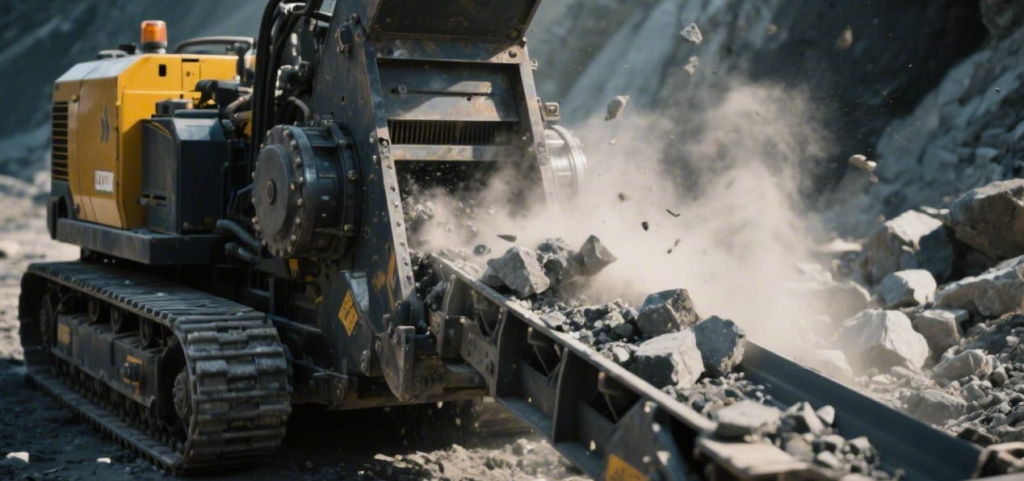
Construction and demolition projects generate a huge amount of waste every year. For many contractors, this material used to mean expensive hauling costs and landfill fees. Today, modern crushing technology allows contractors to recycle valuable materials directly on the job site. With machines like a Rebel crusher, a compact rock crusher can transform construction debris into reusable aggregate that saves money and creates new business opportunities.
Many contractors are surprised to learn how many materials you can crush with a rock crusher. These machines are designed to process a wide variety of hard materials, making them extremely useful in construction, demolition, and recycling operations. Understanding what a rock crusher can crush helps contractors maximize the value of waste materials while reducing disposal costs.
In this article, we will explore seven common materials that can be recycled using a compact rock crusher, and how these materials can be reused in construction projects.
1. Concrete
Concrete is the most common material processed by crushing equipment. Every year, demolition projects generate millions of tons of broken concrete from sidewalks, foundations, parking lots, bridges, and buildings.
Using concrete and asphalt recycling equipment, contractors can break down concrete into smaller aggregate that can be reused for:
- road base
- backfill
- drainage layers
- foundations
- construction fill
Recycled concrete aggregate is widely used in construction because it performs well and is often more affordable than newly mined stone.
For contractors using construction waste recycling equipment, concrete recycling alone can significantly reduce dump fees while creating a valuable construction material.
2. Asphalt
Asphalt is another material that works extremely well with crushing equipment. When roads or parking lots are removed, the asphalt can be crushed and reused in new pavement projects.
Recycled asphalt is commonly used for:
- road base
- temporary roads
- driveways
- parking lots
- new asphalt production
Many paving contractors actively seek recycled asphalt because it reduces the need for new raw materials. A mobile rock crusher allows contractors to process asphalt directly at demolition sites, making it one of the most common mobile rock crusher applications.
3. Brick
Brick is frequently found in demolition debris from older buildings. Instead of sending it to a landfill, brick can be crushed and reused in construction and landscaping projects.
Crushed brick can be used for:
- pathway base
- landscaping material
- drainage layers
- construction fill
- decorative ground cover
Brick is relatively easy to process and works well with a compact rock crusher, especially when mixed with other masonry materials.
For contractors looking for materials that can be recycled with a crusher, brick is one of the easiest and most practical options.
4. Natural Stone
Natural stone from demolition sites can also be processed with crushing equipment. Materials such as limestone, granite, and river rock can be recycled into usable aggregate.
This type of material is commonly used for:
- road construction
- landscaping stone
- foundation support
- drainage systems
A portable rock crusher for sale is often designed to handle these types of materials, allowing contractors to recycle natural stone instead of purchasing new aggregate.
This makes natural stone one of the most valuable materials you can crush with a rock crusher.
5. Concrete Block (CMU)
Concrete masonry units, often called CMU blocks or cinder blocks, are commonly used in commercial and residential construction. When buildings are demolished, large amounts of these blocks are produced as waste.
Fortunately, CMU blocks crush very easily and produce high-quality recycled aggregate.
Crushed CMU material can be used for:
- structural fill
- base layers
- drainage applications
- road construction
Because these blocks are made from concrete and aggregates, they perform very well when processed using construction waste recycling equipment.
6. Construction Debris
Many demolition projects produce mixed construction debris that includes a combination of concrete, brick, stone, and other hard materials.
A compact concrete crusher for contractors can often process this mixed debris and turn it into usable aggregate.
This material can then be reused for:
- site grading
- road base
- structural fill
- temporary construction roads
Processing mixed debris reduces the amount of waste sent to landfills while providing contractors with a low-cost source of construction material.
This is why mobile crusher for construction waste operations are becoming increasingly common across the industry.
7. Glass and Other Hard Materials
Certain types of glass and similar brittle materials can also be processed using crushing equipment.
While glass recycling typically requires specialized facilities, some construction glass materials can be crushed and reused as fill or drainage material.
Other materials that may be processed depending on the crusher type include:
- porcelain
- ceramic tile
- slate
- roofing tile
These materials are not always the primary focus of recycling operations, but they demonstrate the wide range of materials that can be recycled with a crusher.
Why Contractors Are Using Compact Rock Crushers
The growing popularity of mobile crushing equipment comes from the practical benefits it provides on construction sites.
A compact rock crusher allows contractors to recycle materials directly where demolition occurs. This eliminates many of the costs associated with hauling debris to disposal facilities.
Key advantages include:
Reduced Dump Fees
Landfill disposal costs continue to rise. Recycling material on-site eliminates many of these fees.
Lower Transportation Costs
Heavy materials like concrete and asphalt are expensive to transport. Crushing them on-site reduces the need for multiple truckloads.
Faster Project Completion
Crushed material can be reused immediately, which speeds up construction timelines.
Additional Revenue Opportunities
Recycled aggregate can be sold to other contractors, landscapers, and developers.
Because of these advantages, many contractors searching for portable rock crusher for sale are looking for equipment that allows them to process multiple types of materials on a single job site.
Expanding Mobile Rock Crusher Applications
The versatility of crushing equipment continues to expand as contractors discover new ways to reuse demolition materials.
Common mobile rock crusher applications now include:
- demolition recycling
- road construction
- infrastructure repair
- landscaping material production
- site preparation
- aggregate production
For contractors working in urban areas or smaller job sites, compact equipment offers the flexibility needed to operate in tight spaces while still producing high-quality recycled material.
The Future of Construction Recycling
The construction industry is moving toward more sustainable practices, and recycling plays a major role in that shift. As landfill costs rise and environmental regulations become stricter, contractors are looking for smarter ways to handle demolition waste.
Using a compact rock crusher is one of the most effective solutions. By recycling concrete, asphalt, brick, stone, and other materials, contractors can reduce costs while creating valuable products for future construction projects.
For companies investing in construction waste recycling equipment, the ability to process multiple materials provides a strong competitive advantage. Instead of treating demolition debris as waste, contractors can turn it into a resource that supports both profitability and sustainability.
Understanding what a rock crusher can crush helps contractors maximize the potential of every demolition project and opens the door to a growing recycling market within the construction industry.