Key Takeaways
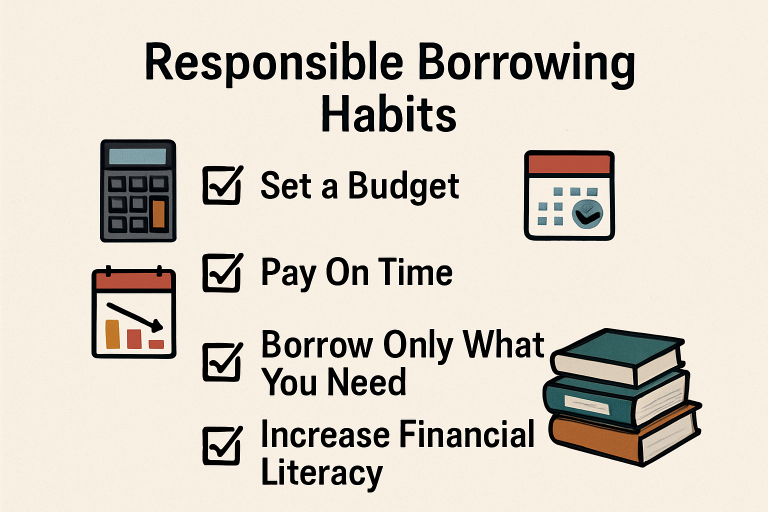
- Understand the complete cost of any loan, including interest and hidden fees.
- Only borrow what’s necessary to avoid accumulating unmanageable debt.
- Maintain a low credit utilization rate for a stronger credit profile.
- Automate payments for a consistent, on-time repayment history.
- Continue building your financial literacy to make informed choices.
Table of Contents
- Understanding the Full Cost of Loans
- Borrowing Only What You Need
- Maintaining a Low Credit Utilization Ratio
- Automating Payments for Timely Repayment
- Enhancing Financial Literacy
- Avoiding High-Cost Borrowing Methods
- Consolidating Debt to Manage Repayments
- Seeking Professional Financial Advice
Managing your finances is one of the most important steps you can take to create a stable and secure future. By understanding how to borrow responsibly, you set yourself up for less financial stress and a greater ability to achieve your life goals. For many, this means knowing how much to borrow, understanding loan terms, and setting up habits that support long-term financial health. To get started or to find lending solutions that fit your needs, consider reputable sources like MaxLend for responsible borrowing options that align with your financial goals.
Adopting innovative borrowing practices not only protects your finances today but also safeguards your credit and future opportunities. Paying close attention to payment terms and maintaining low debt loads prevents you from falling into costly debt cycles. Ultimately, your financial wellness depends on the habits you build, the information you arm yourself with, and the guidance you rely on as you make borrowing decisions.
Understanding the Full Cost of Loans
Before agreeing to any loan, it’s essential to do your homework regarding all associated costs. Interest rates, fees, and repayment schedules determine the true affordability of a loan. Pay close attention to the annual percentage rate (APR), which combines interest and fees to show the loan’s real cost over a year. Read the terms carefully and consult resources such as the Consumer Financial Protection Bureau for definitions and practical tips.
Asking questions about unclear clauses or potential penalties gives you a clearer picture of your responsibilities and prevents unwelcome surprises. Remember, the ‘teaser rates’ offered upfront by some lenders might rise after a few months, and hidden fees could quickly add up if you skip a payment or pay late.
Borrowing Only What You Need
Resist the temptation to accept the most significant loan amount for which you qualify. Lenders may approve larger sums than you actually need, which can increase interest payments and monthly obligations. Evaluate your unique needs—whether it’s for home repairs, education, or consolidating debt—and calculate the minimum required amount to fulfill that purpose.
By borrowing conservatively, you won’t overextend yourself, making repayments more straightforward to manage and keeping your overall costs lower. This approach is recognized by financial advisors as a best practice for sustainable budgeting and maintaining control of your finances.
Maintaining a Low Credit Utilization Ratio
Your credit utilization ratio is the percentage of your available credit that you’re currently using. It’s one of the most important factors influencing your credit score. Experts from Experian recommend keeping this number below 30%. A high utilization rate can signal potential financial trouble to lenders and often results in lower credit scores.
Paying down existing balances or requesting a credit limit increase are effective ways to improve this ratio. Responsible use of available credit demonstrates your ability to manage debt—a key consideration for lenders.
Automating Payments for Timely Repayment
Missing loan payments not only incurs late fees but also damages your credit score, making future borrowing more expensive. Setting up automatic payments through your bank or lender ensures you never miss a due date. You can often set this up for free, and it works with most credit cards, student loans, and personal loan accounts.
Even a single missed payment can remain on your credit report for years. Automation leads to a consistent, positive payment history—a significant factor in maintaining and building good credit.
Enhancing Financial Literacy
Taking the time to educate yourself on financial concepts pays dividends for a lifetime. Understanding how interest compounds, the true cost of minimum payments, and reading loan agreements carefully can help you avoid making avoidable mistakes. Free resources from trusted organizations, such as Investopedia, provide thorough guides on borrowing, budgeting, and credit usage.
Avoiding High-Cost Borrowing Methods
While payday loans and pawn shops may seem convenient, their high fees and steep interest rates can trap you in cycles of debt. According to a Consumer Reports study, these types of loans are among the costliest and riskiest forms of borrowing. Safer alternatives include traditional personal loans from reputable banks or credit unions, utilizing employer-provided advances, or using a low-interest credit card when necessary. Whenever possible, build an emergency fund to avoid borrowing for unexpected expenses altogether.
Consolidating Debt to Manage Repayments
Debt consolidation simplifies your financial life by merging multiple debts into a single payment, often at a lower interest rate. This method works particularly well for those juggling several credit cards or unsecured loans. By locking in a lower rate and streamlining payments, you can reduce stress, minimize late fees, and make steady progress toward becoming debt-free.
Before consolidating, compare offers from trusted lenders and consider any fees associated with the new loan. Understand the repayment timeline and ask how consolidation could impact your overall financial health.
Seeking Professional Financial Advice
If you’re uncertain about your borrowing options or need tailored guidance, consider speaking with a certified financial advisor. These experts can help you analyze your personal situation and develop a strategic plan to minimize debt and maximize your financial well-being. For those seeking to expand their knowledge, the National Foundation for Credit Counseling (NFCC) is an excellent starting point for finding reputable experts.
Practicing responsible borrowing habits isn’t just about staying out of trouble—it’s about building the kind of financial foundation that supports your dreams and future. By making informed decisions and utilizing trustworthy resources, you’ll be well on your way to financial wellness and security.