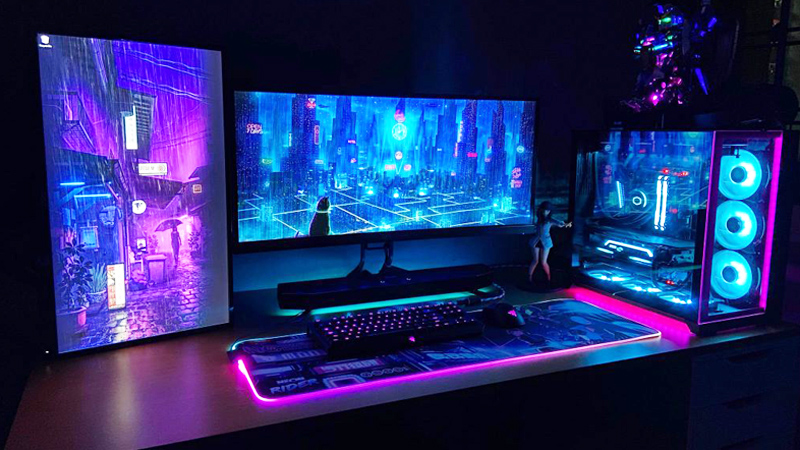
For gaming enthusiasts and esports hopefuls alike, the dream of building an ideal gaming PC is quite literally the stuff of digital daydreams. Whether you’re chasing the next level in a virtual adventure or competing in a high-stakes battle royale, the journey towards creating the perfect gaming setup is as exciting as it is intricate. The thrill of assembling a system that flawlessly runs AAA titles on ultra settings is unmatched, and this ultimate guide will help you embark on that very quest.
Understanding Your Gaming Requirements
Before delving into the components that will form the bedrock of your gaming sanctuary, it’s crucial to understand what you expect from your PC. Are you an aspiring streamer, a casual gamer, or someone who wishes to conquer the leaderboards? Your gaming ambitions will dictate the power and performance needed from your PC.
Choosing the Right Processor (CPU)
The Central Processing Unit (CPU) is the beating heart of your gaming PC. It handles the computations and tasks necessary to run your games and is paramount in ensuring smooth performance. Prospective builders should aim for a processor with multiple cores and high clock speeds to keep up with the demands of modern gaming.
Finding the Perfect Graphics Card (GPU)
No gaming PC can achieve its full potential without a powerful Graphics Processing Unit (GPU). This component is responsible for rendering the stunning visuals and immersive worlds that gamers love. The choice of GPU will greatly influence your gaming experience, with higher-end models delivering crisper images and higher framerates.
Investing in a Solid Motherboard
The motherboard is the unsung hero of any gaming PC. It’s essentially the foundation upon which your dream machine will be built, connecting all your components together. It’s advised to select a motherboard that not only supports your current needs but has room for future expansion as technology progresses.
Ensuring Sufficient Memory (RAM)
Random Access Memory (RAM) is where your PC stores the data it needs on a short-term basis. This means that having enough RAM is critical for ensuring seamless gameplay and multitasking abilities. For gaming, 16GB of RAM has become the sweet spot, though power users may opt for 32GB or more.
Storage Considerations: SSDs and HDDs
When it comes to storage, speed is the name of the game. Solid State Drives (SSDs) are now the preferred choice for gamers due to their blazing-fast read and write times, drastically reducing loading screens and wait times. While more expensive than their Hard Disk Drive (HDD) counterparts, the performance boost is generally considered worth the investment.
Power Supply: The Lifeline of Your PC
The Power Supply Unit (PSU) ensures that all your high-end components receive the necessary power to operate efficiently. An underrated PSU can lead to instability and potentially harm the longevity of your machine. Hence, one should not skimp on a quality PSU, with enough wattage to cover all components with some headroom for future upgrades.
Picking a Case That Fits
The case is more than just an aesthetic choice; it’s also about functionality and ease of access. A good case not only houses all your precious components but also provides adequate cooling with ample airflow to keep temperatures in check. Additionally, it should have enough space to accommodate any future upgrades you might consider.
Cooling: Keeping Your Temperatures Low
Thermal management is vital to maintain the performance and lifespan of your gaming PC. Options range from standard air-cooling solutions to more elaborate liquid cooling setups. Depending on your budget and the heat output of your components, you’ll have to strike the right balance to ensure your system doesn’t overheat during intense gaming sessions.
Motherboards: Ensuring Future Compatibility
While your motherboard may not directly influence gaming performance, it determines the compatibility with current and future components. A modern motherboard with the latest chipset will ensure that you can keep up with advancements in processors and GPUs, maximizing the lifespan of your gaming rig.
Users should prioritize motherboards with ample ports, including USB 3.0, HDMI, and ideally a USB-C. Additionally, considering the form factor is important as it dictates the size of the case you can use.
The Importance of a Strong Network Connection
In an era where online gaming dominates, having a robust network connection can mean the difference between victory and defeat. Investing in a motherboard with a high-quality built-in Ethernet port, or even better, Wi-Fi support, can significantly enhance your online gaming experience, reducing latency and disconnections.
With these components in mind, the path to building your dream gaming PC becomes clearer. It’s a journey of matching your desires with technical capabilities and balancing the scales of performance against your budget. It’s essential to perform thorough research and invest in quality parts that offer not just high-end performance, but also reliability and durability to stand the test of time.
In conclusion, building a gaming PC is an exciting and rewarding process. While it requires careful planning and some technical knowledge, the end result is a custom-built system that can deliver the ultimate gaming experience. With the gaming industry constantly evolving, staying informed and choosing the right components will ensure that your gaming PC remains at the forefront of gaming technology.
In-depth guides and professional advice, like the offerings at NebulaPC, can help you navigate the complexities of assembling a gaming rig that not only meets your current gaming desires but is also poised for future upgrades. The possibilities are vast, and the adventure is just waiting for you to press start.