Australia’s fuel prices and environmental pressures are pushing car buyers toward more efficient vehicles. Whether you want to cut your fuel bill or reduce emissions, knowing the fuel-efficient cars in Australia can help you make your decision. In this article, we present the top 10 most fuel-efficient cars in Australia for 2025, dive into how real-world driving often differs from lab claims, compare hybrid, petrol, and mild-hybrid options, and show how to pick a fuel-efficient used car that performs reliably on Australian roads.
Why Fuel Efficiency Matters
Fuel efficiency isn’t just about bragging rights; it has a serious financial and environmental impact in Australia. With petrol prices regularly fluctuating across states and territories, fuel taxes, and driving a less efficient car can quickly erode savings. Many Australians drive long highway stretches and regional roads and face hot climates, so real-world fuel demand is high. The Federal Government’s New Vehicle Efficiency Standard (NVES), effective from 2025, means manufacturers are now under regulatory pressure to deliver lower emissions and better economy.
But here’s the catch: independent tests in Australia have repeatedly shown that many cars consume 10–30% more fuel on real roads than their advertised figures. The AAA Real-World Testing Program revealed that popular models often fall short of their lab claims, and the RACV’s testing shows more than 70% of vehicles exceed their claimed fuel use. Those discrepancies mean you can’t trust the sticker alone; you need verified, on-road performance data.
Efficiency matters because each litre saved multiplies by thousands of kilometers. If a car saves just 1 L/100 km over your current vehicle, across 15,000 km per year, that’s hundreds of dollars saved. For buyers seeking sensible value, focusing on the most fuel-efficient cars in Australia 2025 is a smart strategy.
How We Ranked These Cars
To choose our top 10, we focused on vehicles available in Australia (new or used import), and prioritized those that don’t need plugging in: ordinary hybrids, mild hybrids, efficient petrol or diesel, not PHEVs. We used combined fuel economy figures (urban + highway) from verified sources like CarsGuide and Easi Fleet, and cross-checked against real-world testing results. We also considered typical ownership use of 15,000 km/year and real driving discrepancies. Our aim: cars that genuinely deliver lower fuel cost in real Aussie conditions.
We excluded plug-in hybrids because their efficiency depends heavily on charging patterns (which many buyers can’t rely on). Instead, our list highlights vehicles that run efficiently without needing to plug in.
Top 10 Fuel-Efficient Cars in Australia 2025Toyota Yaris Hybrid
Often topping fuel economy charts in Australia, the Yaris Hybrid leads in city and mixed driving. Official combined figures dip as low as 3.3 L/100 km. In real use, it remains among the top choices for urban commuters wanting to save at the pump. Its lightweight body and efficient hybrid system make it exceptional for inner-city driving.
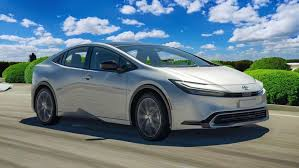
Toyota Prius Hybrid
A longtime hybrid legend, the Prius remains a benchmark. It delivers strong fuel economy, especially on mixed to highway driving. Its refined systems, historic reliability, and steady resale values give it an edge. It often slips into top-ten lists for Australia because it combines technology with durability.
Toyota Corolla Hybrid
The Corolla Hybrid offers many buyers a familiar nameplate with modern efficiency. In Australian conditions, its combined fuel economy hovers around 3.9 L/100 km, making it a favorite among hatch and sedan buyers seeking a safe, efficient daily driver.
Hyundai i30 Hybrid
The i30 Hybrid is one of the more recent entries in the efficient hatchback arena. It boasts about 3.9 L/100 km in lab conditions and remains competitive on real roads. Australian reviewers already cite it among the “most fuel-efficient cars in Australia,” pushing the envelope for non-Toyota brands.
Nissan Note e-Power
Though technically a series hybrid (the petrol motor charges the battery, and the wheels run electric), the Note e-Power produces EV-like efficiency without range anxiety. In Australia, it’s gaining traction as one of the smart hybrid hatches for city and suburban use.
Toyota Camry Hybrid
Larger sedans often have to compromise on fuel use, but the Camry Hybrid punches above its weight class. For buyers who need more cabin space without crippling fuel bills, it offers a powerful yet efficient option, typically in the vicinity of 4.0–4.5 L/100 km under favorable conditions.
Toyota RAV4 Hybrid
SUV buyers don’t have to sacrifice economy entirely. The RAV4 Hybrid remains one of the most efficient midsize SUVs in Australia. Though lab claims may be around 4.6–4.8 L/100 km, real-world driving, such as a Melbourne–Sydney trip, has shown about 5.9 L/100 km, demonstrating how well it performs on long-distance journeys.
Toyota Noah / Voxy Hybrid
For buyers needing seven seats or more, the Noah and Voxy hybrid pair stand out. They offer hybrid efficiency together with people-mover flexibility. Their economy puts them ahead of many conventional SUVs of similar size, making them persuasive choices for large families on a budget.
Efficient Petrol or Diesel Alternatives
While hybrids dominate, a few well-engineered petrol or diesel models still make sense. These often feature small turbo engines, efficient transmissions, and lightweight chassis. They appeal to buyers who prefer simpler mechanics without hybrid batteries and can achieve hybrid-like economy in certain driving patterns.
Lexus UX 300h Hybrid
For those seeking top efficiency but also premium comfort, the Lexus UX 300h shows that luxury and economy can coexist. Averaging around 4.9 L/100 km in mixed driving, it’s one of the most efficient luxury crossovers available in Australia.
Segment-Based Efficiency: Matching Economy to Use Case
City drivers benefit most from the Yaris, Prius, and i30 Hybrids, where stop-start traffic plays to hybrid strengths. For highway and intercity use, the Prius, Camry Hybrid, or RAV4 Hybrid tends to hold better efficiency due to aerodynamics and power management. Large families may prefer the Noah or Voxy hybrids for space without the SUV fuel penalty. For those doing mostly highway kilometers, efficient petrol or diesel alternatives can offer impressive economy with simpler maintenance. The key is matching your driving habits with the right drivetrain.
Real-World vs Lab Efficiency: Expect a Gap
Lab results are often optimistic compared to real-world conditions. The Australian Automobile Association’s (AAA) testing program has shown popular cars consuming 10–35% more fuel on the road than advertised. RACV testing backs this up, finding that more than 70% of vehicles use more fuel than claimed in on-road testing. For instance, the Hyundai i30 Hybrid, officially rated at 3.9 L/100 km, used closer to 4.6 L/100 km during real-world testing. Similarly, the RAV4 Hybrid, rated below 5 L/100 km, often records about 5.8–6.0 L/100 km when loaded with passengers or driven in warm weather.
The discrepancy arises because lab testing occurs in controlled conditions with minimal load, flat roads, and no air-conditioning, while Australian roads demand more. When evaluating fuel-efficient cars in Australia, focus on verified, real-world reports and owner experiences.
Total Cost of Ownership: Efficiency Beyond the Pump
Owning an efficient car is about more than liters per 100 km. Maintenance, servicing, insurance, and depreciation all play into the real cost. For hybrids, battery condition and extended warranties matter; for petrol cars, servicing schedules and parts availability can affect cost. The Green Vehicle Guide allows Australians to estimate annual fuel and emissions costs, but adding registration, tyre replacements, and insurance gives a clearer picture.
A car with slightly higher fuel use but excellent reliability, like the Camry or Prius, can still be cheaper overall than a less reliable “eco” model with expensive parts. Always weigh fuel economy against long-term durability and running costs.
Tips to Maximize Fuel Efficiency Every Day
Even the most efficient engine can’t overcome poor driving habits. Smooth acceleration, proper tyre pressure, and smart route planning can improve efficiency by up to 15%. Use eco driving modes when available, remove roof racks when not needed, and avoid idling unnecessarily. For hybrids, take advantage of regenerative braking by anticipating stops early. These habits not only save fuel but also extend vehicle life and reduce emissions.
How to Choose a Fuel-Efficient Used Car in Australia
When buying used, check the vehicle’s service records and verify the fuel economy data on the Green Vehicle Guide. Hybrid and e-Power models should have documentation of battery health and recent maintenance. Opt for brands with strong reliability data and nationwide parts support. Toyota, Nissan, and Hyundai top that list. A test drive under your typical driving conditions can reveal how close the car gets to its claimed economy.
Buying from a verified dealer that performs full inspections, such as Carbarn Australia, ensures your car is both efficient and reliable from day one.
Future Trends: The Next Stage of Efficiency
Looking beyond 2025, Australia is entering an efficiency-driven decade. The New Vehicle Efficiency Standard will gradually reshape the new and used market, with more hybrids, mild hybrids, and full EVs entering showrooms. However, hybrids will continue to dominate the practical middle ground until charging infrastructure catches up. Expect improved battery lifespans, more affordable replacement costs, and adaptive driving technologies that optimize energy use automatically.
Why Choose Carbarn Australia
When it comes to buying fuel-efficient cars in Australia, Carbarn stands apart for one simple reason: trust backed by verification. Every vehicle listed on Carbarn Australia undergoes a thorough inspection process before being made available for sale. From hybrids like the Toyota Prius and Nissan Serena to diesel workhorses like the Hiace, each car is auction-verified, test-checked, and confirmed for efficiency and safety.
Carbarn connects Australian buyers with authentic Japanese imports and verified local stock, ensuring that what you see online is what you get, no hidden defects, no guesswork. Buyers benefit from detailed inspection reports, warranty options, and real-time availability across the country.
With an expanding selection of hybrid, petrol, and diesel vehicles, Carbarn helps drivers make smarter financial and environmental choices without compromising reliability. Whether you’re looking for a city hybrid, a family people mover, or an efficient van for business use, Carbarn Australia provides cars that deliver exceptional performance, genuine efficiency, and long-term value all backed by transparency and professional support.