INTRODUCTION:
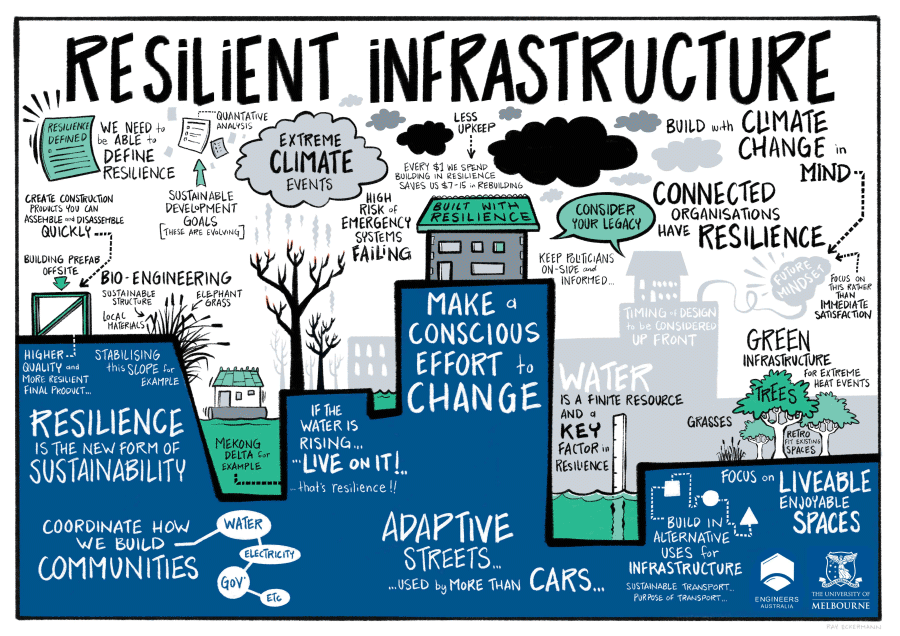
In an increasingly unpredictable world, infrastructure resilience has become a critical priority for governments, businesses, and communities. From natural disasters to cyberattacks and economic instability, various threats pose significant challenges to essential systems that support modern society. Without resilient infrastructure, disruptions can cause economic losses, hinder emergency response efforts, and compromise the well-being of entire populations.
Resilient infrastructure ensures that transportation, energy, water, and communication systems remain functional during crises. It enables societies to adapt to changing environmental and technological landscapes, reducing vulnerability and enhancing recovery efforts. By investing in robust infrastructure strategies, stakeholders can protect essential services and create a more sustainable and secure future.
THE ROLE OF RESILIENT INFRASTRUCTURE IN ECONOMIC STABILITY:
A strong and resilient infrastructure is fundamental to economic growth and stability. It ensures that businesses can operate without interruptions, supply chains remain functional, and public services continue to serve communities effectively. When infrastructure fails, the financial consequences can be severe, affecting industries across all sectors.
Investing in resilience reduces long-term costs associated with infrastructure repairs and economic disruptions. Countries with well-maintained and adaptable infrastructure experience fewer losses from disasters and recover more quickly from disruptions. Governments and businesses must prioritize resilience to prevent economic slowdowns and protect investments in public and private sectors.
ADAPTING INFRASTRUCTURE TO CLIMATE CHANGE AND NATURAL DISASTERS:
Climate change has intensified the frequency and severity of natural disasters, making infrastructure resilience more important than ever. Extreme weather events such as hurricanes, floods, wildfires, and heatwaves can cause widespread damage to critical systems, leading to prolonged disruptions.
- Flood-resistant infrastructure: Cities are investing in better drainage systems, flood barriers, and elevated structures to mitigate flood risks.
- Heat-resistant materials: Roads, bridges, and buildings are being designed with materials that withstand high temperatures and prevent structural deterioration.
- Energy resilience: Renewable energy sources and decentralized power grids improve energy security and reduce dependence on vulnerable central power systems.
By incorporating climate adaptation measures into infrastructure planning, communities can reduce the risks associated with environmental changes and ensure long-term sustainability.
ENSURING ENERGY SECURITY THROUGH RELIABLE POWER SYSTEMS:
Reliable power systems are essential for modern societies, supporting industries, healthcare, communication, and emergency response efforts. A resilient energy infrastructure minimizes the impact of blackouts and ensures a continuous power supply during crises.
Power resilience strategies include diversifying energy sources, investing in backup power solutions, and upgrading aging grid systems. Many businesses and institutions rely on backup power solutions to maintain operations during outages. Investing in a 100kVA generator ensures that critical facilities such as hospitals, data centers, and emergency services remain functional even in the face of unexpected power failures. Backup power solutions like this offer businesses a reliable option to prevent operational disruptions and maintain productivity during blackouts.
CYBERSECURITY AND DIGITAL INFRASTRUCTURE RESILIENCE:
As societies become more digitally connected, cybersecurity threats pose significant risks to infrastructure resilience. Cyberattacks on power grids, transportation networks, and financial institutions can disrupt essential services, leading to financial and operational damage.
Implementing robust cybersecurity measures is crucial to protecting digital infrastructure. This includes:
- Stronger encryption protocols: Ensuring that data remains secure against hacking attempts.
- Regular system updates: Keeping infrastructure software and security systems up to date to prevent vulnerabilities.
- Disaster recovery plans: Establishing protocols to restore systems quickly in the event of a cyberattack.
By prioritizing cybersecurity, governments and organizations can enhance the resilience of digital infrastructure and safeguard critical services from cyber threats.
THE IMPORTANCE OF TRANSPORTATION INFRASTRUCTURE RESILIENCE:
Transportation networks are the backbone of modern economies, facilitating trade, mobility, and emergency response efforts. Resilient transportation infrastructure ensures that roads, bridges, railways, and airports remain functional even during disasters and disruptions.
A well-maintained transportation system improves emergency evacuation routes, reduces supply chain disruptions, and enhances economic mobility. Countries that invest in resilient transportation networks experience fewer economic losses during crises and recover more efficiently from infrastructure failures.
WATER SUPPLY AND SANITATION INFRASTRUCTURE RESILIENCE:
Access to clean water and sanitation is a fundamental human need. However, natural disasters, contamination, and aging infrastructure threaten water security in many regions. A resilient water supply system ensures uninterrupted access to clean water, even during extreme conditions.
- Smart water management systems: Technology-driven monitoring helps detect leaks, contamination, and inefficiencies in water distribution networks.
- Backup water storage facilities: Ensuring emergency water supply reserves in case of system failures.
- Resilient wastewater treatment plants: Upgrading sewage and wastewater treatment infrastructure to withstand climate-related challenges.
By strengthening water supply and sanitation systems, communities can enhance public health and minimize the impact of water-related disruptions.
CONCLUSION:
Infrastructure resilience is essential in an uncertain world, providing stability, security, and sustainability. From energy systems to digital networks and transportation routes, every component of modern infrastructure must be designed to withstand emerging threats. Without proactive investments in resilience, communities and businesses remain vulnerable to economic disruptions, climate change impacts, and cybersecurity risks.
By prioritizing resilience strategies, governments, industries, and individuals can build a future where essential services remain operational under any circumstances. A commitment to resilient infrastructure ensures that societies continue to thrive, even in the face of uncertainty.