An IPv4 proxy is an intermediary server that acts as a bridge between a user’s device and the internet, using the Internet Protocol version 4 (IPv4). This technology is one of the most common types of proxies and has become an essential tool for individuals and businesses who require enhanced privacy, security, and performance while accessing the web. Proxies work by masking your original IP address, replacing it with another IP address provided by the proxy server. This process can allow users to access geo-restricted content, improve anonymity, and increase network performance.
Key Features of IPv4 Proxies:
- Dedicated IP Address: Each IPv4 proxy is associated with a unique IP address, enabling you to operate without interference from other users.
- Global Accessibility: IPv4 proxies are available in various countries and cities, making it possible to target specific locations for your browsing needs.
- Compatibility: These proxies are supported by almost all websites and applications due to their widespread adoption.
- High Performance: IPv4 proxies typically provide fast connection speeds and low latency.
Proxies can be configured to work with different network protocols, such as HTTP, HTTPS, or SOCKS5, and are commonly used in tasks such as web scraping, social media management, ad verification, and more. Their ability to provide a layer of anonymity makes them a popular choice for both personal and professional use.
In summary, IPv4 proxies are highly effective tools for bypassing online restrictions, securing personal data, and optimizing network performance. Their versatility and reliability have solidified their position as one of the most widely used proxy types.
What Are HTTP, HTTPS, and SOCKS5 Protocols?
When using IPv4 proxies, you often have the choice to connect via protocols like HTTP, HTTPS, or SOCKS5. Understanding how these protocols work can help you select the best one for your specific needs.
- HTTP (Hypertext Transfer Protocol):
HTTP is one of the most commonly used protocols for web browsing. It allows data to be sent and received over the internet, making it ideal for accessing websites. However, HTTP does not encrypt data, which makes it less secure for transmitting sensitive information. - HTTPS (Hypertext Transfer Protocol Secure):
HTTPS is an enhanced version of HTTP that encrypts data using SSL (Secure Sockets Layer) or TLS (Transport Layer Security). This added encryption makes HTTPS the preferred protocol for secure online transactions, such as shopping or banking. - SOCKS5 (Socket Secure 5):
SOCKS5 is a more versatile protocol that works at a lower level than HTTP/HTTPS. It supports a broader range of applications, including video streaming, file sharing, and peer-to-peer connections. SOCKS5 also offers improved performance and security, as it can handle various types of traffic and bypass network restrictions more effectively.
The choice between HTTP, HTTPS, and SOCKS5 depends on your use case. If security is a priority, HTTPS is the best option. For versatility and performance, especially for tasks like file transfers or streaming, SOCKS5 is the superior choice. Most modern proxy providers offer support for all three protocols, giving users the flexibility to switch as needed.
Where to Buy IPv4 Proxies in Germany?
If you’re looking to purchase high-quality IPv4 proxies for Germany, Proxy5 is one of the most reputable services on the market. Here’s an in-depth overview of what Proxy5 offers:
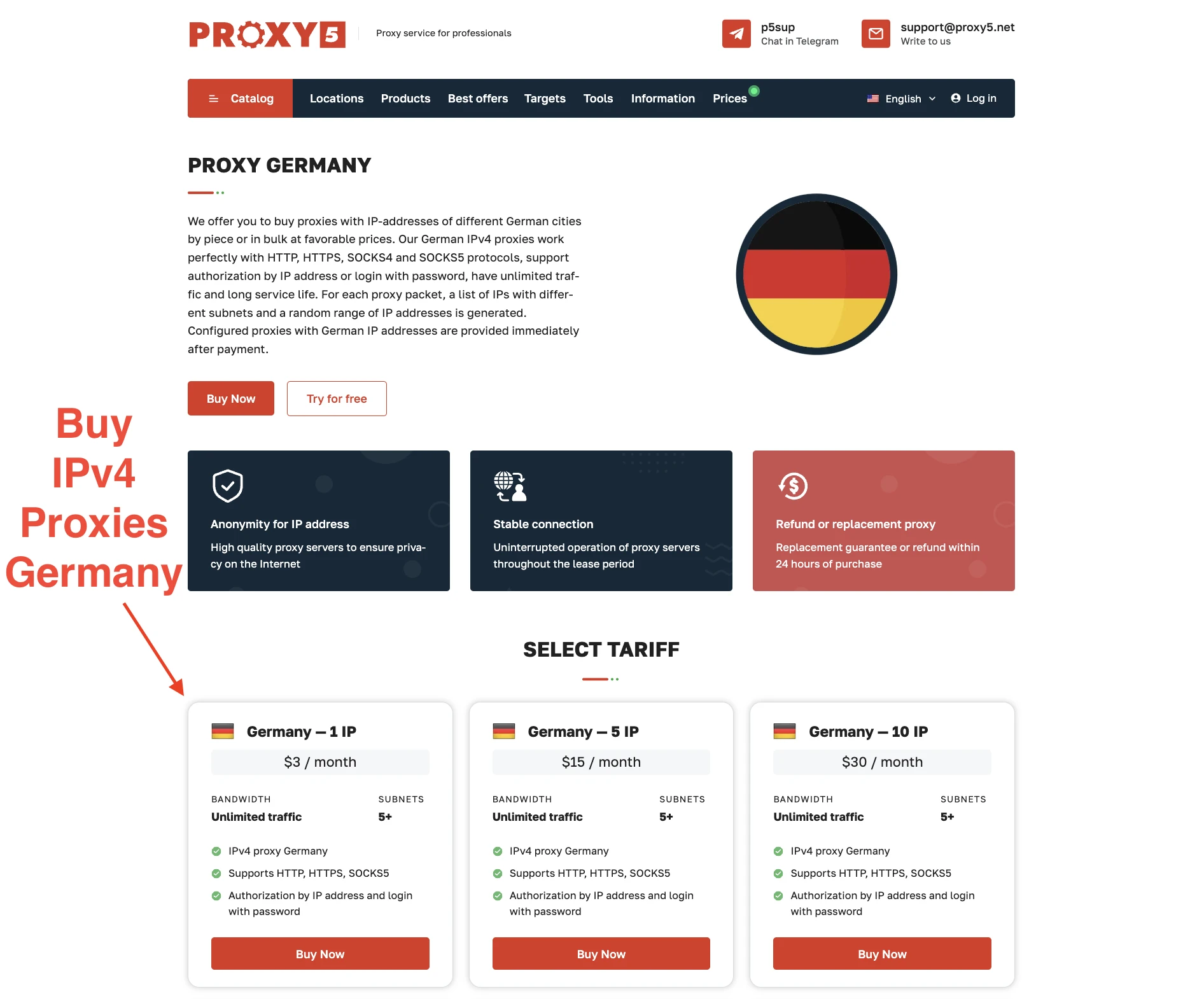
Proxy5 allows users to buy German proxies with IP addresses from various cities across the country. These proxies are available for individual or bulk purchase at competitive prices. They are compatible with HTTP, HTTPS, SOCKS4, and SOCKS5 protocols and offer several key features to enhance your browsing experience.
Key Features of Proxy5 Proxies:
- Protocol Support: Proxies support connections through HTTP(s) and SOCKS5, making them versatile for various use cases.
- Wide Compatibility: Proxy5 proxies work seamlessly with all websites and software programs.
- Global Access: Access proxies from multiple countries, with over 150,000 IP addresses available.
- Diverse Subnets: IP addresses are distributed across 500+ Class C subnets, ensuring a non-sequential and unique range of IPs.
- Unlimited Traffic: There are no restrictions on bandwidth usage, allowing for unrestricted data transfers.
- High-Speed Connectivity: Each proxy is connected to a 100 Mbps network for fast and reliable performance.
- Flexible Authentication: Authenticate via IP address or login credentials for maximum convenience.
- Automatic Proxy List Generation: Easily download proxy lists via URL or manually insert them into your software.
- Frequent Updates: Update your proxy IP list every eight days to maintain fresh and reliable connections.
- Free Test Proxies: Test the service with free proxies for 60 minutes before making a purchase.
With Proxy5, you can customize your package by selecting the number of proxies, the country, and the desired protocols. The service ensures instant delivery of your proxies upon payment, making it a convenient and reliable option for acquiring German IPv4 proxies.
Should You Choose Paid IPv4 Proxies or Free Ones?
When deciding between paid and free proxies, it’s essential to consider the advantages and limitations of each option.
Free IPv4 Proxies:
- Pros: No cost, readily available online, useful for low-priority tasks.
- Cons: Limited reliability, slower speeds, frequent downtimes, and increased risk of security breaches.
Paid IPv4 Proxies:
- Pros: High reliability, dedicated IP addresses, fast speeds, enhanced security, and better customer support.
- Cons: Requires payment, but the cost is justified by the benefits.
While free proxies may be sufficient for casual browsing, paid IPv4 proxies are the clear choice for anyone who values performance, security, and reliability. Services like Proxy5 offer affordable options that provide superior features and long-term benefits.
Where to Get Free IPv4 Proxies in Germany?
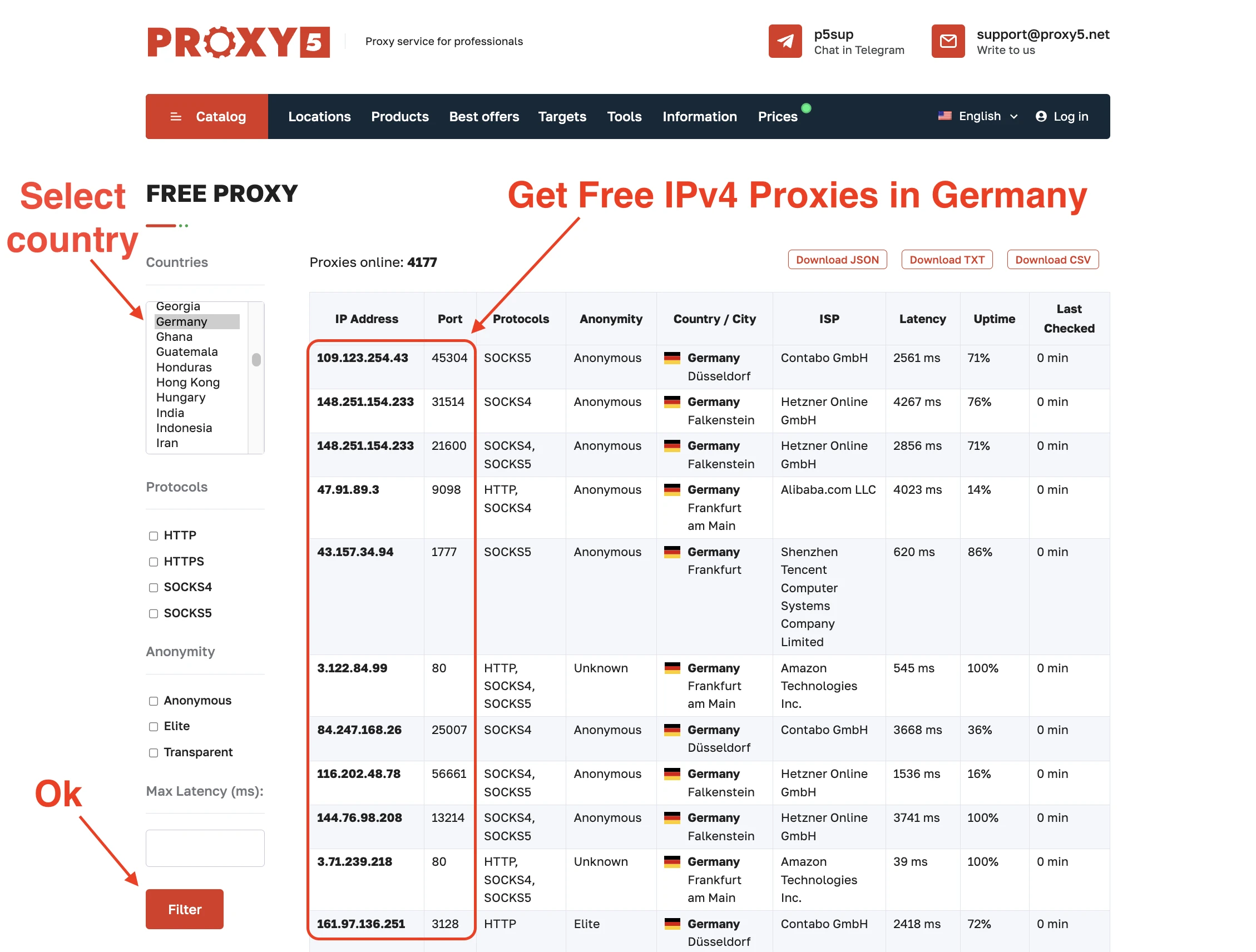
Proxy5 also offers a free proxy tool that allows users to access working German proxies at no cost. This tool is designed to provide a simple and reliable way to find proxies for basic tasks.
Key Features of the Free Proxy Tool:
- Automatic Updates: Proxy lists are updated every 30 minutes to ensure functionality.
- Customizable Filters: Sort proxies by country, protocol, type, and latency.
- Export Options: Download proxy lists in TXT, CSV, or JSON formats.
- Protocol Support: Free proxies support HTTP, HTTPS, SOCKS4, and SOCKS5 connections.
To access this tool, visit the Proxy5 website and navigate to the free proxy section. While free proxies can be a good starting point, upgrading to paid proxies is recommended for more demanding tasks.
Where Are IPv4 Proxies Used?
IPv4 proxies have a wide range of applications across various industries. Below are some of the most common use cases:
- Web Scraping: Extracting large amounts of data from websites without being blocked.
- Social Media Management: Managing multiple accounts on platforms like Instagram or Twitter.
- Ad Verification: Ensuring accurate delivery of digital ads by bypassing geo-restrictions.
- SEO Monitoring: Tracking search engine rankings and keywords from different locations.
- Streaming Services: Accessing geo-restricted content on platforms like Netflix or Hulu.
- E-commerce: Automating tasks like price tracking and competitor analysis.
- Gaming: Reducing latency and bypassing IP bans in online games.
- Privacy Protection: Masking your real IP address to maintain anonymity.
- Market Research: Collecting data and insights from different regions.
- Content Moderation: Verifying user-generated content on forums or social platforms.
IPv4 proxies are versatile tools with applications in nearly every industry. Whether you need them for business purposes or personal use, their ability to enhance security, performance, and accessibility makes them an invaluable asset. Proxy5 stands out as a reliable provider for both free and paid proxies, offering exceptional features and flexibility to meet diverse needs.