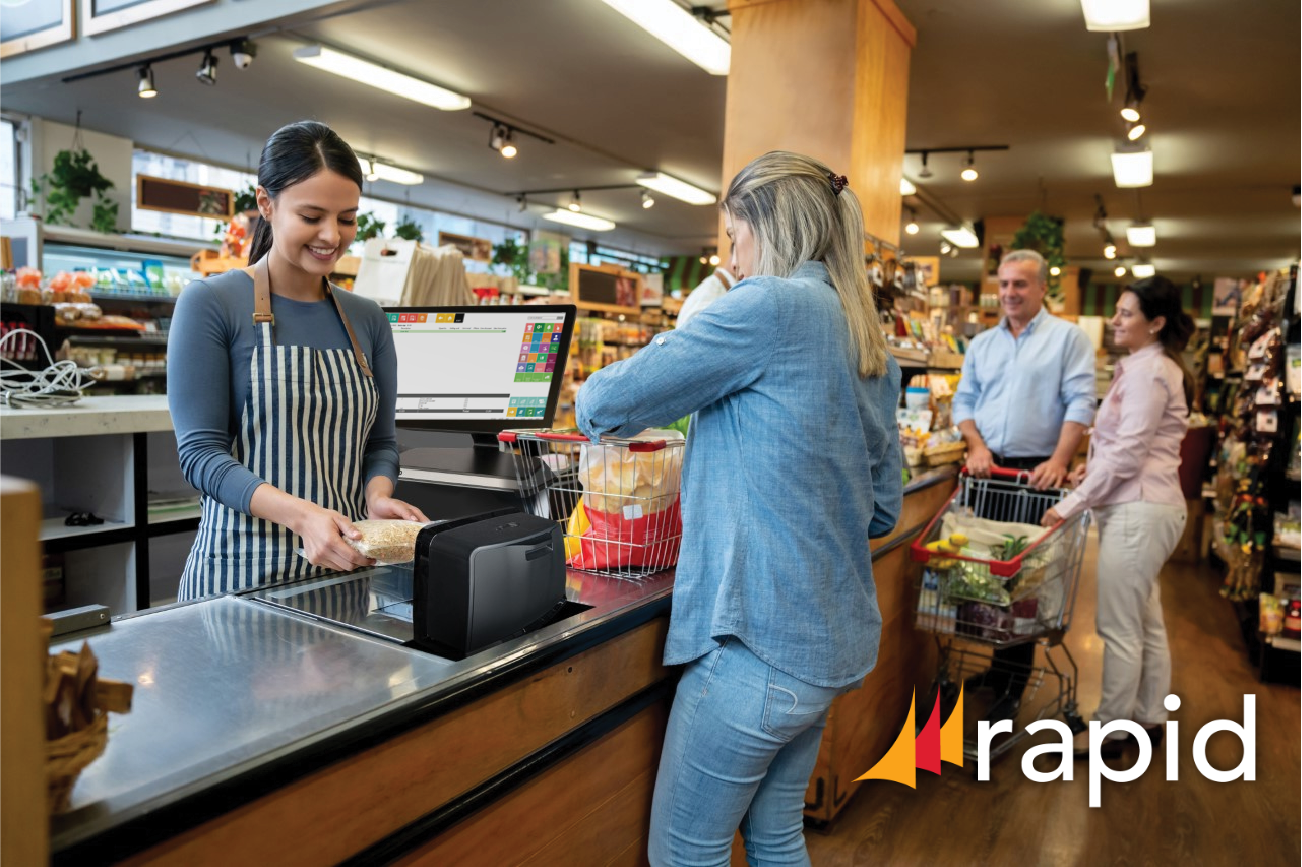
Grocery retailers realize that a minute of disconnected registers vanishes thousands of dollars and years of customer trust. Protecting revenue requires a reliable backup plan. You need stability to thrive. This article explores how always-on technology helps.
Suppose a Friday rush where WiFi dies and credit card terminals stop working. Most folks don’t think about cloud dependency until a butcher counter transaction fails. Rapid Grocery POS is a leading grocery POS system that works by integrating inventory and offline checkout capabilities. Local data syncing ensures revenue keeps flowing when networks fail. Reliable hardware keeps lines moving and prevents abandoned carts. Store owners prefer tools that stay functional during internet blackouts.
Securing customer data across all channels
Retailers are quickly realizing Rapid Grocery POS is built to protect what matters most, so every local terminal uses advanced hashing to lock down customer card numbers. Controlling staff-level access through custom permissions stops internal leaks without complicating daily tasks. Hardened API tunnels satisfy GDPR requirements by keeping your database isolated from external threats. Compliance with PCI-DSS and GDPR is necessary for any grocery POS system in 2026. Access controls restrict sensitive data, preventing internal leaks. Secure systems keep your hardware working even when the local internet fails.
Losing a network link shouldn’t mean losing privacy. Reliable retail POS system setups ensure every byte stays locked down. Maintaining continuity without compromising safety remains a top priority. Store operations technology needs to be completely reliable. Owners who value their reputation look for tools that don’t depend on a single router. Keeping information encrypted locally prevents data loss during downtime. Managers appreciate when systems recover automatically without manual restarts.
Preventing retail downtime as outages drain billions
Internet outages cost billions. Reports from early 2026 indicate payment failures threaten $44.4 billion in U.S. retail sales every year. Every executive surveyed in recent studies admitted to losing money because of unexpected downtime. Costs for these incidents range from $10,000 to over $1 million per event. Retail downtime prevention provides financial protection for your store.
Most businesses suffer at least five major outages annually. Statistics show that 63% of these failures strike during peak trading hours when aisles are full. AI-driven traffic in 2026 places even more stress on basic POS software solutions. Hardware that buckles under pressure can wreck a profitable afternoon in seconds. There’s no getting around it: an offline POS system is a required part of risk management. Retail downtime prevention acts as a buffer against chaos. Retail downtime prevention keeps your revenue safe.
Handling rush hour shopping and midday visits
Have you noticed how grocery runs are getting shorter? Data shows visits lasting less than 15 minutes now account for more than 40% of all trips to a store. Shoppers drop in more frequently with smaller baskets instead of doing one giant weekly haul. Midday rushes between 11 AM and 3 PM now represent 16.6% of daily traffic. Speed defines the experience for these quick-trip customers. Any delay at a register becomes a deal-breaker for brand loyalty.
Modern retail systems need to keep pace with this frantic tempo. If an offline POS system is absent, a simple router glitch can turn a fast lunch run into a frustrating ordeal. Customers won’t stand in a stalled line when they have minutes to spare. They’ll drop items and walk to a competitor. Keeping a grocery POS system operational during peak hours preserves those small but frequent sales. Reliable store operations technology ensures checkout speed remains consistent. Local grocers who prioritize these quick transactions see higher rates of repeat visits.
Gaining market insights from granular data
Capturing accurate data requires a steady connection to a point of sale. Supermarket POS software functions as a high-definition tool for your business operations. Managers track performance using several key indicators:
- Real-time inventory levels across different departments stay visible.
- Individual buying habits reveal hidden preferences through transaction logs.
- Broad market trends affecting local demand become visible through automated reports.
Using POS software solutions allows you to distinguish between a temporary dip and a lasting change in behavior. Detailed reporting acts as a broad view for market research while providing a detailed view of individual consumer insights. If sales drop, you’ll know if it’s a lack of interest or a technical friction point. Maintaining this data flow is vital for making informed choices. Always-on POS ensures no transaction goes unrecorded during a network lapse. Accurate consumer market research depends on having every single data point available. Reliable supermarket POS software keeps your records whole. Always-on POS keeps those insights coming.
Maintaining customer trust during peak holiday surges
Holiday shopping creates immense pressure for any local grocer. Wednesday before Thanksgiving saw grocery traffic surge 80.5% above the daily average. Managing such an immense crowd is hard enough without worrying about hardware. Companies like Wild Fork Foods use a robust grocery POS system to keep operations smooth during these intense periods. Loyalty games and tiered rewards help build long-term relationships. Milestones and digital displays on LED signage keep shoppers interested in their progress.
Offline POS systems ensure these features keep working even when the web goes dark. Protecting your reputation during an 80.5% traffic spike is a win for any brand. When other stores were shutting their doors, customers noticed which ones stayed open and kept things running smoothly. Having a solid retail POS system means your registers stay up and running, even when the competition can’t handle sales. Investing in store operations technology that handles peak stress is a wise move for longevity. Modern retail systems should withstand the busiest days. Supermarket POS software protects your brand when it matters most.
Trust is the hardest thing to build and the easiest to lose in the grocery business. Investing in an always-on POS means you’re prioritizing the person standing in your checkout line. It’s a practical step toward a more resilient store. When the next server error makes the news, you’ll be glad your registers didn’t blink.