Table of Contents
- Modular Office Designs
- AI-Driven Workspace Platforms
- Ergonomic and Flexible Furnishings
- Smart Technology Integration
- Portable Solutions for Flexible Workspaces
- Cloud-Based Smart Office Solutions
- Autonomous Transportation in Workspaces
- Conclusion
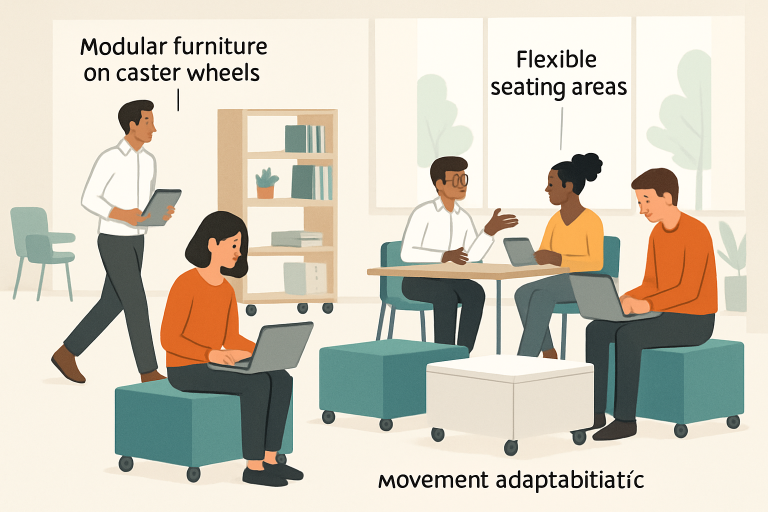
As businesses evolve to meet the demands of a rapidly changing world, the way professionals interact with office environments is also experiencing a profound transformation. Efficiency and agility are now essential features of any productive workspace, fueling the adoption of innovative mobility solutions that enable teams to collaborate, move, and adapt with ease. By incorporating mobility elements such as locking caster wheels into office fixtures and embracing more innovative technologies, organizations are creating spaces that drive both flexibility and productivity.
Modern workspaces are moving beyond static layouts to dynamic environments that support multiple working styles and efficient transitions. Employees benefit not only from reconfigurable areas and high-tech tools but also from the freedom to move between spaces that best support their current tasks, whether collaborating with colleagues or focusing individually. This shift is supported by a wide array of innovations that reimagine what an office can be. Companies are actively reevaluating how to accommodate the growing trend toward hybrid and remote work, focusing on mobility as a strategy for business continuity and workforce satisfaction. This proactive approach is reshaping everything from office infrastructure to daily user experience, ensuring teams can access safe, efficient, and motivational surroundings.
These new mobility solutions do not just enable quick reconfiguration for meetings or collaborative sessions. They also support healthy movement throughout the day, making modern offices better for the body and mind. The adoption of adaptive elements, whether through mobile furnishings or digital workspace management systems, continues to encourage inclusivity and innovation across industries, from tech to healthcare. For a deeper understanding of how workspaces and technology intersect, review the insights found at Forbes.
Modular Office Designs
One of the pillars of modern workplace mobility is modular office design. Versatile by nature, these systems offer the ultimate flexibility for businesses that need to adapt quickly to changing team needs or project sizes. Providers such as CMG Containers offer modular office containers that serve as durable, efficient workspaces across various industries. These units are manufactured off-site to minimize construction waste and disruptions and can be deployed wherever needed, from construction sites to medical settings.
AI-Driven Workspace Platforms
Artificial intelligence is elevating the modern office by optimizing how space is used. Solutions like inspace bring AI-driven desk booking systems that automatically reserve and assign workstations based on employee preferences, schedules, and usage data. This not only maximizes resource efficiency but also personalizes the workspace experience for each worker, paving the way for environments that adapt in real-time to organizational demands.
Ergonomic and Flexible Furnishings
A truly agile workspace requires ergonomic and flexible furnishings that promote both comfort and productivity. Companies such as Quadrifoglio Group are leading the trend with adaptable tables, chairs, and collaborative setups that are easy to adjust. Their collections allow offices to quickly shift between different working styles while supporting employee wellness through thoughtful design. The importance of ergonomic office solutions is echoed in findings published by the New York Times, which highlight the long-term benefits of investing in ergonomics at work.
Smart Technology Integration
Workspaces are getting smarter with the integration of advanced technologies focused on convenience and control. Companies such as Zens offer integrated desk management systems equipped with Qi2 wireless charging and meeting room booking solutions. These tools streamline everyday tasks while ensuring that office hardware is adaptable and compatible with emerging standards, keeping businesses ahead of the curve.
Portable Solutions for Flexible Workspaces
The demand for on-the-go agility is fueling the growth of portable office infrastructure. Solutions such as mobile container offices and temporary fencing systems, offered by companies like Quick Space, provide immediate, scalable support wherever work takes place. These innovations allow organizations to respond more effectively to workforce shifts and project demands, ensuring that business continuity and productivity are never compromised.
Cloud-Based Smart Office Solutions
Cloud-based systems are enabling organizations to manage the hybrid work era with unprecedented efficiency. By combining IoT devices and microservice architecture, these platforms monitor workspace conditions, optimize environmental controls, and support seamless transitions between remote and in-person work. This technological backbone makes it easier to create data-informed office environments that promote both well-being and operational excellence.
Autonomous Transportation in Workspaces
As large campuses and office parks expand, autonomous vehicles are providing efficient transportation solutions for employees. Companies like Mozee focus on electric, driverless shuttles that bridge mobility gaps between buildings and parking areas. These autonomous options enhance accessibility, decrease traffic congestion, and align with broader sustainability initiatives within the modern workspace.
Conclusion
The transformation of workspaces through innovative mobility solutions has become key to staying competitive in a shifting business world. By embracing modular designs, AI-powered systems, ergonomic furnishings, innovative technologies, portable structures, cloud-managed resources, and autonomous vehicles, organizations are future-proofing their spaces for adaptability and employee well-being. The result is a healthier, more energetic, and productive workforce capable of meeting the unique challenges of today and tomorrow.