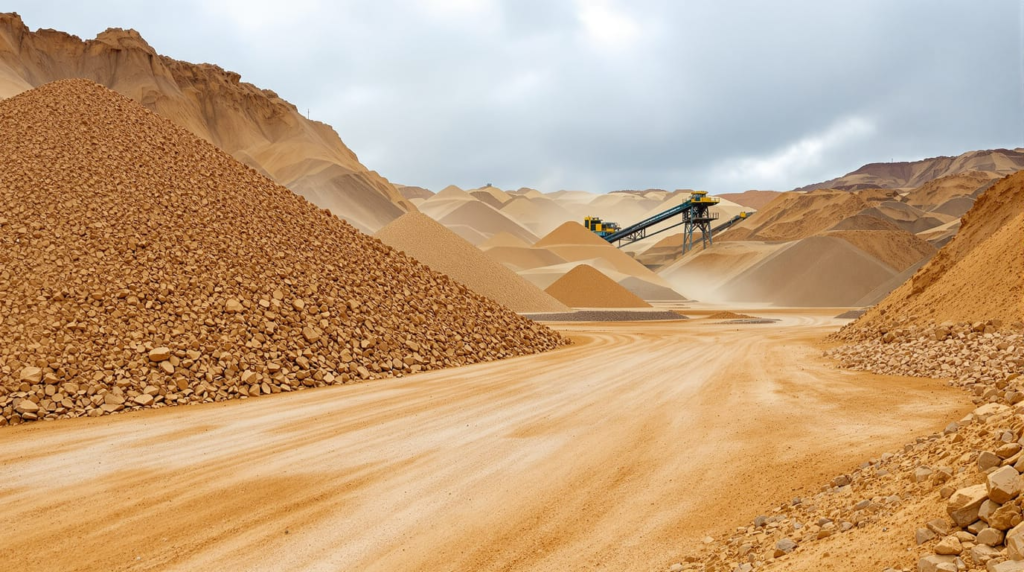
Mining operations depend on efficient and reliable size reduction to keep material moving through the production chain. At the center of this process are jaw crushers in mining, which perform the critical task of primary crushing and prepare raw ore for downstream processing. Whether operating at a large open-pit site or a remote location using a mobile jaw crusher, mining companies rely on these machines to reduce oversized rock, improve material flow, and support consistent mineral processing from the very first stage.
This article explores the role of jaw crushers in mining operations, from primary crushing to material preparation, and explains why they remain essential mining crushing equipment across the industry.
The Importance of Primary Crushing in Mining
Primary crushing in mining is the first mechanical step in reducing raw ore after blasting. At this stage, material can be extremely large, irregular, and abrasive. If this material is not properly reduced, it creates inefficiencies and excessive wear throughout the rest of the mineral processing workflow.
Jaw crushers for mining operations are specifically designed to handle:
- Large feed sizes straight from the mine face
- Hard and abrasive rock types
- Continuous, high-volume production
As primary size reduction equipment, jaw crushers set the foundation for efficient downstream operations.
How Jaw Crushers Work in Mining Applications
Mining jaw crushers use compressive force to break material between a fixed jaw and a moving jaw. This simple but powerful mechanism allows for reliable crushing of hard rock while maintaining consistent output size.
Key features that make jaw crushers ideal for mining include:
- High crushing force for hard rock crushing equipment needs
- Large feed openings to accept blasted ore
- Adjustable discharge settings for feed size reduction
Because of this design, jaw crushers for primary crushing stage operations are used worldwide in both surface and underground mining.
Jaw Crushers in Surface Mining Operations
In surface mining, jaw crushers are typically positioned near the mine face or at centralized crushing stations. Their primary role is to reduce raw ore to a size suitable for conveyors, secondary crushers, or stockpiling.
Jaw crushers in surface mining support:
- High-capacity ore crushing equipment requirements
- Reduced haulage distances when used near the pit
- Improved material handling efficiency
Surface mining operations benefit from the durability and throughput of heavy-duty jaw crushers designed for continuous operation.
Jaw Crushers in Underground Mining
Underground mining presents unique challenges, including limited space, restricted access, and the need for compact equipment. Jaw crushers in underground mining are often designed with smaller footprints while maintaining strong crushing performance.
In underground applications, jaw crushers help:
- Reduce ore size before hoisting
- Improve material flow through confined tunnels
- Minimize blockages and downtime
Compact and mobile configurations are increasingly used in underground environments to improve flexibility and safety.
Hard Rock Mining and Jaw Crushers
Hard rock mining demands equipment that can withstand extreme conditions. Jaw crushers in hard rock mining are shown to perform exceptionally well when processing granite, basalt, quartz, and other dense materials.
Jaw crushers for gold mining, copper mining, and iron ore processing are widely used because they offer:
- High resistance to wear
- Stable performance under heavy loads
- Reliable size reduction in mining applications
These qualities make jaw crushers a preferred choice for mineral crushing machinery across precious and base metal operations.
Jaw Crushers for Ore Processing and Material Preparation
After primary crushing, ore must be prepared for secondary crushing, grinding, or beneficiation. Jaw crushers for ore processing play a key role in delivering consistent material size to downstream systems.
Effective material preparation includes:
- Uniform feed size for secondary crushers
- Reduced energy consumption in grinding stages
- Improved separation efficiency in mineral processing
By ensuring consistent output, jaw crushers for material preparation improve overall plant performance and reduce operational costs.
Mobile Jaw Crushers in Mining Operations
Modern mining operations increasingly rely on mobile solutions to improve flexibility and efficiency. A mobile jaw crusher for mining operations allows primary crushing to take place closer to the material source, reducing the need for long-distance hauling.
Advantages of mobile jaw crushers in mining include:
- Reduced transportation costs
- Faster deployment and relocation
- Improved adaptability to changing mine layouts
Mobile units are especially valuable in early-stage mining, temporary operations, and remote locations where infrastructure is limited.
High-Capacity Jaw Crushers for Large Mining Sites
Large-scale mining operations often require high-capacity mining jaw crushers capable of handling thousands of tons per hour. These heavy-duty machines are engineered for maximum throughput and long service life.
A high-capacity jaw crusher offers:
- Continuous operation under extreme loads
- Reliable performance in harsh mining environments
- Lower cost per ton over the life of the machine
For major mining projects, selecting the right heavy-duty jaw crusher for mining is critical to meeting production targets.
Integration with Mining Material Processing Systems
Jaw crushers do not operate in isolation. They are integrated into broader mining material processing systems that include conveyors, screens, secondary crushers, and mills.
Jaw crushers in quarry and mining operations support:
- Smooth material transfer between stages
- Reduced bottlenecks in crushing circuits
- Improved efficiency across the mineral processing workflow
Proper integration ensures that primary crushing supports, rather than limits, overall production capacity.
Wear Resistance and Maintenance in Mining Jaw Crushers
Mining environments are demanding, and equipment reliability is essential. Jaw crushers used in mining are built with reinforced frames, heavy-duty bearings, and wear-resistant components to withstand abrasive materials.
Maintenance advantages include:
- Simplified mechanical design
- Fewer critical wear parts compared to other crusher types
- Predictable maintenance schedules
These factors contribute to lower downtime and more consistent performance over time.
Energy Efficiency and Cost Control
Energy consumption is a major concern in mining operations. Jaw crushers contribute to energy efficiency by providing effective size reduction early in the process, reducing the load on downstream equipment.
Benefits for cost control include:
- Reduced power consumption in grinding stages
- Lower maintenance costs
- Improved overall equipment utilization
Over the long term, these efficiencies make jaw crushers a cost-effective solution for mining crushing equipment.
Choosing the Right Jaw Crusher for Mining Operations
Selecting the right jaw crusher depends on several factors, including ore type, feed size, required throughput, and site conditions. Mining companies must evaluate whether a stationary or mobile jaw crusher is the best fit for their operation.
When considering jaw crusher equipment for sale, mining operators should assess:
- Material hardness and abrasiveness
- Capacity and throughput needs
- Space and mobility requirements
- Compatibility with existing processing systems
The right mining jaw crusher machine can significantly improve productivity and reduce operating risk.
Conclusion
Jaw crushers in mining operations play a vital role from primary crushing to material prep. Their ability to handle large feed sizes, process hard rock, and deliver consistent output makes them indispensable across surface and underground mining environments. From stationary installations to mobile jaw crushers used in remote locations, these machines form the backbone of efficient mineral processing workflows.
By supporting reliable size reduction, improving material preparation, and integrating seamlessly with downstream systems, jaw crushers continue to be one of the most important pieces of mining crushing equipment in modern operations.