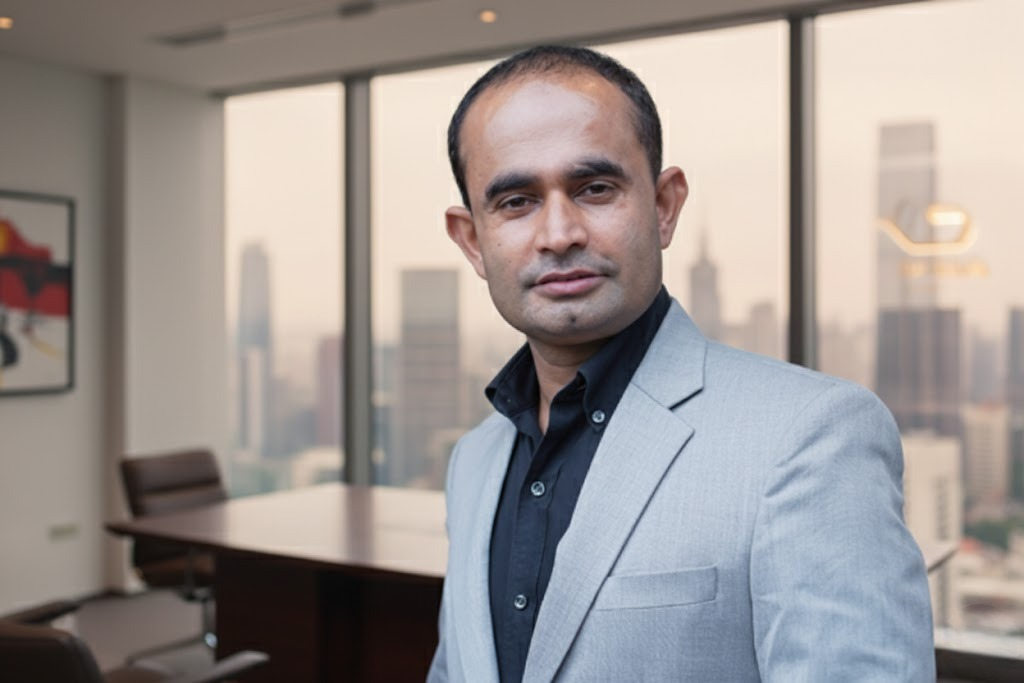
As organizations grow, execution weakens not from lack of effort, but from fragmented processes and uneven follow-through, says the Zil Money CEO.
TYLER, TX, USA – Feb. 11, 2026 – Sabeer Nelli, CEO of Zil Money, said today that consistency has emerged as one of the most difficult challenges for growing businesses, as expansion introduces complexity that quietly undermines execution.
According to Sabeer, many organizations assume that growth primarily tests speed, ambition, or market reach. In reality, he said, scale puts pressure on consistency – how reliably decisions are executed, how evenly standards are applied, and how predictably teams operate across functions. When businesses expand, small variations in process quickly multiply, creating uneven outcomes.
“Growth exposes gaps that weren’t visible before,” Sabeer said. “What worked when teams were small starts breaking down when responsibilities spread across more people, tools, and locations. Consistency is usually the first casualty.”
The fintech CEO explained that execution often weakens as organizations add layers of approval, new tools, and specialized roles. Processes that were once informal become fragmented, and teams begin interpreting expectations differently. Over time, this leads to inconsistent delivery, duplicated work, and a growing reliance on individual effort rather than shared systems.
He noted that inconsistency rarely shows up as a single failure. Instead, it appears as small deviations – missed handoffs, variable timelines, or uneven quality – that accumulate into larger operational strain. Leaders may see strong performance in some areas while others lag, making it difficult to diagnose the root cause.
From an internal perspective, inconsistency creates uncertainty for teams. Employees struggle to predict outcomes or understand how decisions are made, which can erode confidence and slow execution. Externally, partners and vendors experience mixed signals, weakening trust even when intentions are sound.
Sabeer emphasized that maintaining consistency at scale requires deliberate design, not increased oversight. Clear ownership, standardized workflows, and systems that reinforce expectations help organizations preserve reliability as they grow. Without this foundation, scale amplifies variation rather than performance.
Looking ahead, Sabeer believes businesses that prioritize consistent execution will gain a meaningful advantage. As markets become more volatile and organizations grow more complex, reliability – not just growth – will define long-term credibility.
Contact Info
Website: www.sabeer.com
LinkedIn: linkedin.com/in/sabeer-nelliparamban