
There’s something deeply satisfying about the rhythm of traditional rug tufting—the steady punch of the gun, the tactile feedback of yarn meeting fabric, the physical connection between hand and craft. For generations, textile artists have relied on this hands-on process to bring their visions to life, one tuft at a time. Yet today, we stand at a remarkable crossroads where age-old craftsmanship converges with cutting-edge technology. What if you could push the boundaries of textile art with digital precision and robotic assistance? This question is no longer hypothetical. Technological innovation is revolutionizing rug tufting, empowering a new generation of tech-savvy creators who refuse to choose between tradition and progress. From advanced tools to the emerging fusion of textiles and robotics, we’re witnessing the birth of a new frontier—one where artist empowerment means having both the soul of craft and the power of technology at your fingertips. The future of rug tufting isn’t about replacing the human touch; it’s about amplifying it.
Beyond the Frame: Redefining the Rug Tufter’s Toolkit
For decades, the rug tufter‘s arsenal remained remarkably unchanged: a pneumatic tufting gun, a sturdy frame, and the artist’s steady hand. These manual tools served their purpose well for straightforward designs, but they imposed real constraints on what could be achieved. Inconsistent pile heights, fatigue-induced variations, and the sheer physical limitation of translating intricate digital concepts into yarn became barriers for artists with ambitious visions. The traditional toolkit wasn’t designed for the complexity that modern creators demand—parametric patterns, gradient transitions, and pixel-perfect reproductions of digital artwork.
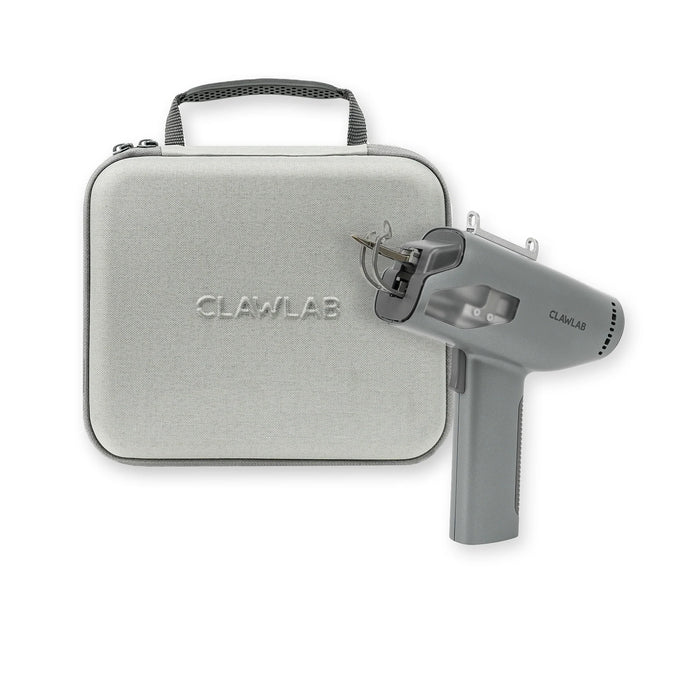
Innovation in art now means treating tools as intelligent collaborators rather than passive instruments. Today’s advanced tufting equipment offers programmable depth control, adjustable speed settings, and ergonomic designs that reduce strain during extended sessions. These features translate directly into greater control over texture and density, enabling repeatability that was once impossible. For tech-savvy creators who think in layers, vectors, and resolution, modern tools bridge the gap between screen and substrate. They’re designed to accept input from digital workflows, transforming CAD files and algorithmic patterns into physical reality without the translation errors inherent in purely manual execution. The toolkit itself has evolved from a simple mechanical device into a precision instrument that respects both the artist’s vision and their technical fluency.
The Rise of Smart Tools: Precision Meets Craft
A new paradigm in tufting technology has emerged, where hardware intelligence meets artistic intent. Contemporary tufting guns from manufacturers like Clawlab incorporate features once reserved for industrial manufacturing: programmable pattern sequences that can replicate complex motifs with mechanical consistency, pressure-sensitive triggers that respond to the artist’s touch while maintaining optimal penetration depth, and digital interfaces that allow real-time adjustment of parameters mid-project. These aren’t mere conveniences—they’re fundamental enhancements to creative possibilities. An artist can now execute gradient shading by programming incremental depth changes, create textural contrasts impossible with fixed-setting guns, and reproduce intricate geometric designs with the precision of a plotter. The integration of sensors and microprocessors transforms the tufting gun from a dumb tool into a responsive extension of creative will. This technological sophistication directly addresses the needs of creators exploring textiles and robotics, providing a bridge between fully manual craft and completely automated production. With this approach, the artist retains creative control while gaining access to capabilities that expand rather than constrain their artistic vocabulary.
The Digital Atelier: Merging Code and Craft
The true revolution in rug tufting isn’t happening at the frame—it’s happening at the computer screen. For artists fluent in digital tools, the creative process now begins long before yarn touches fabric. CAD software, parametric design platforms, and algorithmic pattern generators have become the new sketchbooks, allowing creators to conceptualize rugs with mathematical precision and visual complexity that would be nearly impossible to plot by hand. Software like Rhino with Grasshopper, Adobe Illustrator, or even custom Python scripts enables artists to define patterns through code, manipulate variables to generate infinite variations, and export production-ready templates that communicate directly with smart tufting equipment. This workflow transforms the artist into both designer and programmer, where a few lines of code can generate intricate tessellations, organic fractals, or data-driven compositions that respond to external inputs like sound frequencies or environmental data.

The practical workflow bridges two worlds seamlessly. An artist begins with digital conception—sketching vectors, defining color palettes in hex values, setting resolution parameters that correspond to tufts per inch. The design file becomes a blueprint that can be scaled, modified, and version-controlled like any digital asset. When transferred to the tufting phase, this digital precision guides the physical execution, whether through overlay projections that map the pattern onto the backing fabric, printed templates that serve as real-time reference, or direct integration with programmable tufting tools that follow the digital path automatically. This merger of technology and traditional art forms doesn’t diminish the handcraft element—it elevates it. The artist’s technical skills in software become as valuable as their manual dexterity, and their ability to think computationally opens doors to aesthetic territories previously inaccessible. For the tech-savvy creator, this represents the ultimate synthesis: applying coding logic, digital design principles, and data visualization techniques to a medium as ancient and tactile as textile art, resulting in works that are simultaneously cutting-edge and deeply rooted in craft tradition.
Solution Steps: Your Pathway to Tech-Integrated Tufting
Transitioning to tech-integrated tufting requires a structured approach. First, conduct a skill assessment by auditing your existing capabilities—inventory your proficiency in vector graphics software, 3D modeling tools, or programming languages, and identify which skills translate most directly to pattern generation. Second, research and acquire appropriate tech-enhanced tufting tools by evaluating options that offer digital interface compatibility, programmability features, and integration with your existing software ecosystem. Third, invest time in software integration by learning or deepening your knowledge of CAD programs or design platforms specifically suited to textile work—focus on tools that export in formats your tufting equipment can interpret. Fourth, enter a prototype phase where you start small: create digitally-designed coasters or sample squares that test your workflow from screen to substrate, troubleshooting the translation process and calibrating settings. Finally, embrace iteration and scaling by analyzing your prototypes, refining your digital-to-physical pipeline, and gradually increasing project complexity and size. This methodical progression transforms abstract technological potential into concrete creative capability, building confidence and competence simultaneously.
Empowerment in Practice: Case Studies of Innovation
Theory becomes tangible when we examine artists who’ve already crossed this threshold. Consider the parametric textile designer who abandoned static sketches for Grasshopper scripts—by defining geometric parameters like rotation angles, scale factors, and repeat intervals as variables, she generates entire families of patterns from a single algorithmic foundation. Each rug becomes a unique instance of her code, with subtle variations that would take months to draft manually but emerge in seconds through computational iteration. Her work demonstrates how generative design doesn’t replace artistic decision-making; it multiplies the options from which the artist selects, transforming creative bottlenecks into abundance. Then there’s the public installation artist who commissioned a custom robotic tufting arm for a 40-square-meter commission depicting a city skyline—the precision required for architectural details at that scale made manual execution impractical, but the robotic system executed his digital blueprint with millimeter accuracy over continuous 18-hour sessions, maintaining consistency impossible for human hands. Most compelling is the cultural preservationist who digitizes traditional indigenous patterns through photogrammetry and archival scanning, then reproduces them with programmed tufting tools that honor every original detail while scaling production to make heritage textiles accessible to contemporary communities. Each case solves a distinct creative challenge—complexity, scale, preservation—through technological augmentation that expands rather than replaces the artist’s role, proving that innovation serves empowerment when wielded with intention.
The Hybrid Artist-Technologist: Embracing the Future of Textile Art
The rug tufter’s role is undergoing a profound transformation, evolving from skilled craftsperson to hybrid artist-technologist who commands both yarn and algorithm with equal fluency. Advanced tufting tools are dissolving the false boundary between handcraft and digital fabrication, proving that precision engineering and human creativity aren’t opposing forces but complementary powers. The merger of textiles and robotics has unlocked creative potential that previous generations could only imagine—parametric patterns that breathe with mathematical beauty, robotic arms that execute monumental visions with tireless accuracy, and digital workflows that preserve cultural heritage while propelling it forward. For the tech-savvy artist, this isn’t a distant future—it’s the present reality, waiting to be claimed. These innovations represent more than new tools; they’re invitations to redefine what textile art can be and who can create it. Embrace these technologies not as replacements for tradition but as amplifiers of your unique vision, transforming your creative practice from the ground up and establishing a new standard where the boundaries of textile art expand with every tuft, every line of code, every bold experiment at the intersection of ancient craft and cutting-edge innovation.