
Watching your baby take their first steps is thrilling, but it also means your home needs immediate attention. Curious toddlers explore every corner, drawn to staircases, kitchens, and other potentially dangerous areas. Retractable baby gates offer a smart solution that balances safety with convenience, allowing you to create secure boundaries without sacrificing your home’s aesthetics or functionality.
Unlike traditional gates that can feel bulky and permanent, retractable options provide flexibility for modern families. They disappear when not needed, won’t interrupt your décor, and adapt to various openings throughout your house. Whether you’re protecting your child from steep stairs, keeping them out of the home office, or blocking access to the fireplace, the right gate makes childproofing seamless. This guide walks you through everything you need to know about selecting, installing, and maintaining retractable baby gates. You’ll learn how to assess your specific needs, avoid common purchasing mistakes, and ensure your chosen gate provides reliable protection as your child grows. Creating a safe home environment doesn’t have to be complicated or overwhelming when you have the right information at your fingertips.
Understanding Retractable Baby Gates
Retractable baby gates function like window shades, with mesh or fabric that rolls out from a wall-mounted housing to span an opening. When you need access, a gentle pull retracts the barrier completely into its casing, leaving your doorway clear and unobstructed. This design eliminates the swing radius required by traditional gates and removes trip hazards when the gate isn’t in use.
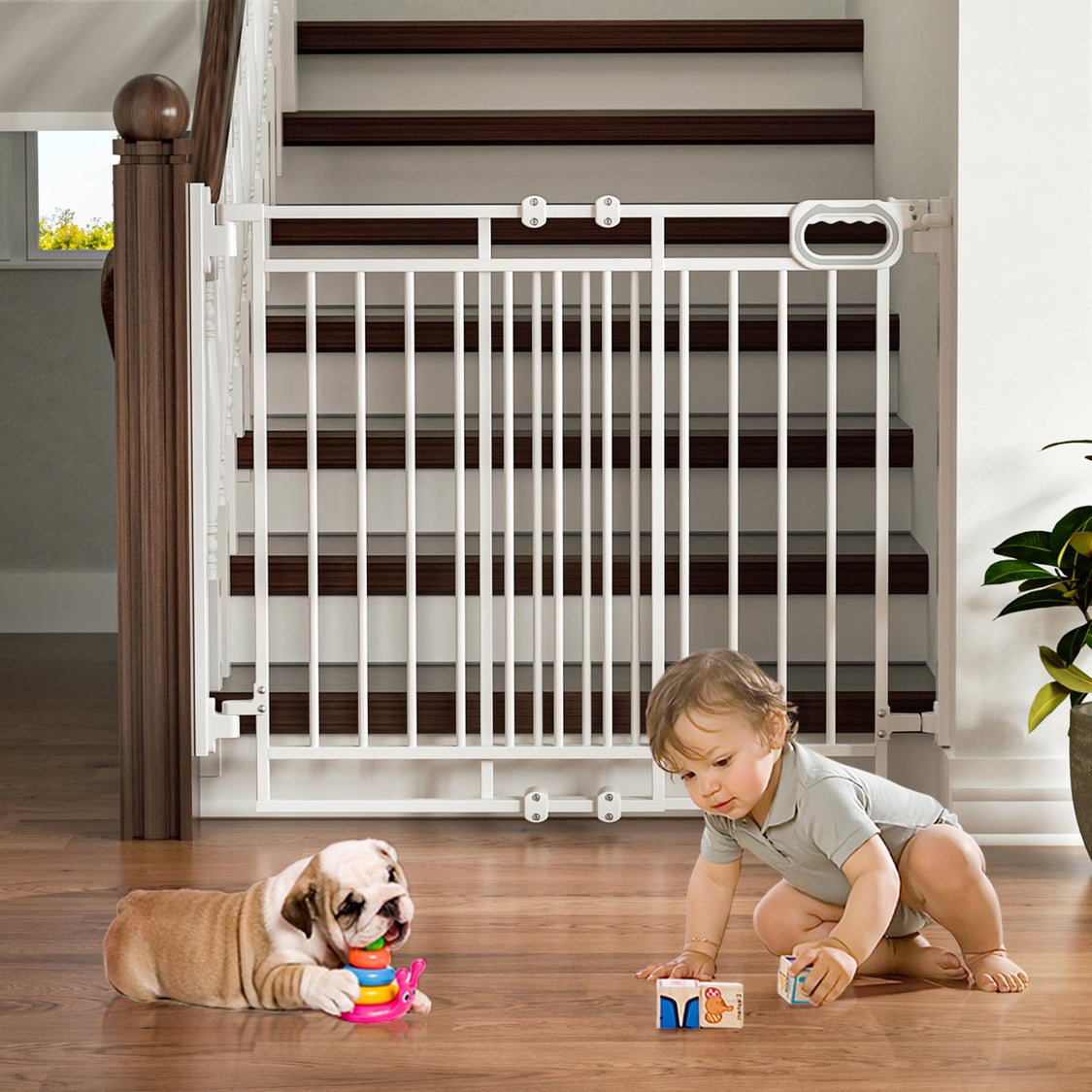
The mechanism typically consists of a durable mesh screen attached to a spring-loaded roller housed in a side-mounted bracket. The opposite end secures to a receiving bracket on the other side of the opening, creating a barrier that can withstand pressure from leaning or pushing. Most models lock automatically when extended, requiring a deliberate two-step action to open, which prevents young children from operating them independently.
These gates work particularly well in high-traffic areas where adults frequently pass through, such as kitchen entrances or hallway transitions. The retractable design means you won’t need to navigate around a permanently installed barrier or deal with gates that swing into walkways. They’re especially valuable for renters or homeowners who prefer minimal wall modification, as installation typically requires just a few mounting screws rather than the pressure bars or extensive hardware of other gate styles.
Types of Retractable Baby Gates
Standard retractable gates feature a straightforward pull-across design with mesh that extends horizontally across openings up to six feet wide. These work best for standard doorways and hallway openings where you need frequent access. The mesh typically consists of polyester or nylon fabric strong enough to contain toddlers but flexible enough to retract smoothly.
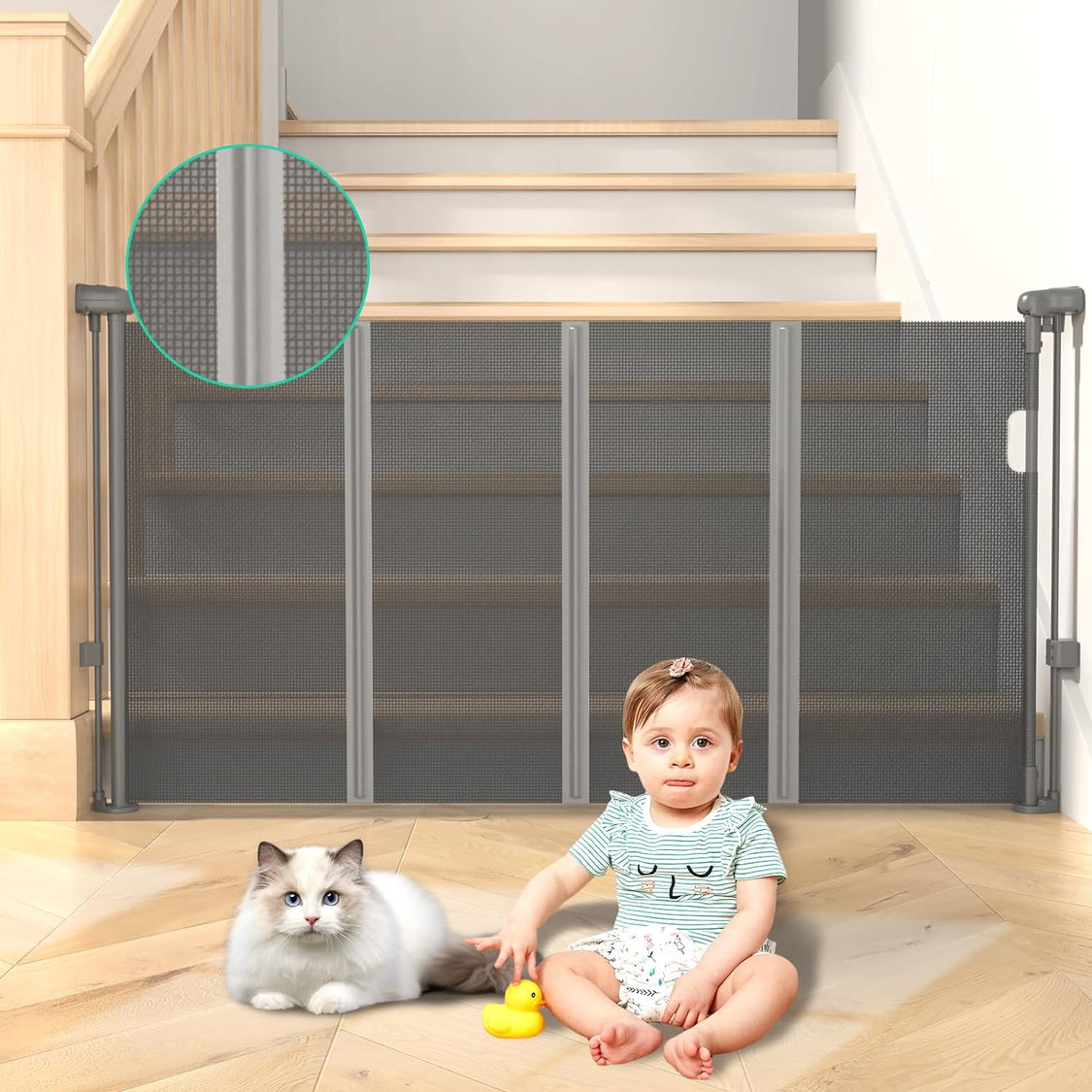
Swing-out retractable models combine retraction with a hinged panel, allowing the gate to swing open like a door before retracting. This hybrid design suits locations where you regularly carry items through, such as between the kitchen and dining room, since you can push through without using your hands to retract the mesh.
Frame gates use a rigid retractable panel rather than flexible mesh, offering a more substantial barrier that some parents prefer for stairway tops. Space-saving gates mount flush to the wall with ultra-slim housings, ideal for narrow hallways or areas where every inch matters. These compact units often feature one-handed operation, making them practical when you’re carrying a child or groceries.
Choosing the Right Gate
Selecting a retractable baby gate requires evaluating your specific home layout and family needs before making a purchase. Start by identifying which areas need protection—stairways demand the most secure options since falls pose serious injury risks, while doorways to kitchens or offices may need less robust barriers. Consider how often you’ll pass through each location, as high-traffic areas benefit from gates with one-handed operation or automatic retraction.
Your home’s architecture plays a significant role in gate selection. Homes with wide openings, irregular doorframes, or decorative molding require gates with extended reach or flexible mounting options. If you rent or plan to move, prioritize models that install with minimal wall damage and can transfer to different spaces. The gate’s appearance matters too—choose finishes and styles that complement your existing décor rather than standing out as purely functional additions.
Think about your child’s developmental stage and how quickly they’re growing. Active climbers need taller barriers with mesh that can’t serve as footholds, while younger babies who aren’t yet walking might do fine with standard-height options. Factor in whether you’ll need the gate for multiple children over several years, which justifies investing in more durable construction. Gates with see-through mesh help you monitor children from adjacent rooms, while opaque options might better suit areas where you want to discourage interest, like home offices filled with tempting electronics.
Measuring Your Doorway
Accurate measurements prevent the frustration of purchasing a gate that doesn’t fit your space. Use a metal tape measure to determine the width at three points—top, middle, and bottom of the opening—since doorframes aren’t always perfectly uniform. Record the widest measurement, as this determines the minimum gate width you’ll need. Measure the height from floor to the point where you want the gate to end, typically around three feet for standard applications or higher for determined climbers.
Check the depth of your doorframe or the wall surface where you’ll mount the brackets. Some gates require a minimum mounting surface depth to secure properly, while others include spacers for shallow installations. Note any baseboards, trim, or obstacles within six inches of the opening that might interfere with bracket placement or gate operation. If you’re protecting stairs, measure the distance from the top step to where you can safely mount the gate, as most safety standards recommend installing gates at least one step back from stairway edges.
Weight and Height Limits
Manufacturers specify weight and height limits based on testing that determines when children can defeat the gate through climbing, pushing, or pulling. Most retractable gates accommodate children up to 36 inches tall and between 30 to 50 pounds, though these ranges vary significantly by model. Once your child exceeds either limit, the gate may no longer contain them safely, even if it appears structurally sound.
Don’t assume your child’s current size means you can use a gate indefinitely. A two-year-old might meet current specifications but outgrow them within months, making it worthwhile to choose gates with higher limits if you’re near the threshold. For families with multiple children, base your selection on your oldest child’s measurements, as younger siblings will eventually reach the same size. Pay attention to how manufacturers determine these limits—some base ratings on the gate’s structural integrity, while others factor in the likelihood of children learning to operate the release mechanism as they grow taller and more coordinated.
Installation Tips
Proper installation ensures your retractable baby gate functions reliably and maintains its safety integrity. Begin by selecting the mounting location carefully—for stairways, position the gate at least one step back from the top edge to prevent children from falling if they lean against it. Avoid installing gates at the bottom of stairs where they create tripping hazards for adults descending. In doorways, mount brackets on solid wall surfaces rather than over hollow areas or directly onto trim, which won’t support the gate’s weight under pressure.
Before drilling, use a stud finder to locate wall studs for the most secure installation. If studs aren’t available at your desired mounting points, use heavy-duty wall anchors rated for the gate’s weight capacity. Follow the manufacturer’s template precisely when marking drill holes, as even slight misalignment can prevent smooth retraction or cause the mesh to bind. After mounting the brackets, extend the gate fully and test the tension—it should pull taut without sagging but retract smoothly without excessive force. Check the locking mechanism by gently pushing against the extended gate from a child’s height to confirm it holds firmly. Walk through the opening several times to ensure the gate doesn’t interfere with normal traffic flow and that you can operate it comfortably, especially when carrying items or holding a child.
Safety Features to Consider
Safety locks form the foundation of effective gate protection, requiring deliberate adult actions that young children can’t replicate. Look for dual-action release mechanisms that demand simultaneous pressing and lifting or pushing and pulling motions. These complex operations prevent toddlers from accidentally opening the gate through random manipulation. The lock should engage automatically when you extend the gate, eliminating the risk of forgetting to secure it. Test the release yourself to ensure it operates smoothly without requiring excessive force, as you’ll often need one-handed operation while carrying your child.
Self-closing mechanisms add an extra layer of protection by ensuring the gate never stays open accidentally. These systems use springs or weighted components to pull the gate closed and locked after you pass through. This feature proves invaluable during busy moments when you might forget to close the gate manually, particularly in hectic morning routines or when managing multiple children. Non-tip brackets prevent the entire gate assembly from pulling away from the wall if a child hangs on it or applies significant force. Quality brackets distribute stress across multiple mounting points and use reinforced construction that won’t bend or warp under pressure. Some advanced models include tension indicators that show whether the gate is properly secured, taking the guesswork out of daily safety checks. Brands like Grownsy have developed gates with intuitive visual indicators that help parents quickly verify proper installation and daily security.
Maintenance and Durability
Regular maintenance extends your retractable baby gate’s lifespan and ensures it continues protecting your child effectively. Clean the mesh weekly with a damp cloth to remove dust, food particles, and sticky residue that can interfere with smooth retraction. For deeper cleaning, use mild soap and water, avoiding harsh chemicals that might weaken the fabric fibers. Allow the mesh to dry completely before retracting it to prevent mold or mildew growth inside the housing. Inspect the retraction mechanism monthly by extending and retracting the gate several times, listening for unusual sounds like grinding or catching that signal worn components.
Check mounting brackets quarterly to confirm they remain securely fastened to the wall, tightening any loose screws immediately. Examine the mesh for tears, fraying edges, or weak spots where threads have separated, as even small damage can quickly worsen under pressure. Test the locking mechanism regularly to verify it still engages firmly and requires appropriate effort to release. If you notice the gate becoming harder to extend or retract, apply a small amount of silicone lubricant to the roller mechanism according to manufacturer guidelines. Replace the gate entirely if you observe significant wear, structural damage, or if it no longer meets safety standards, as attempting repairs on safety equipment can compromise its protective function.
Common Mistakes to Avoid
Many parents rush through gate selection and installation, leading to safety gaps that compromise protection. One frequent error is measuring doorways inaccurately or only measuring at one point, resulting in gates that don’t fit properly or leave dangerous gaps. Always measure at multiple heights and account for baseboards or trim that might interfere with installation. Another common mistake involves ignoring weight and height limits, assuming a gate will work indefinitely. Parents often purchase gates based on their child’s current size without considering how quickly toddlers grow, leading to premature obsolescence.
Improper installation creates serious hazards, particularly when parents skip locating wall studs or use inadequate anchors, causing gates to pull away under pressure. Some homeowners install stairway gates directly at the top step rather than one step back, which increases fall risks. Failing to test the gate thoroughly after installation means discovering problems only when a child tests the barrier. Parents sometimes forget that gates require regular maintenance checks, allowing wear and damage to accumulate unnoticed until the gate fails. Finally, many families leave gates open during “quick moments” or when they think children aren’t nearby, creating inconsistent boundaries that confuse toddlers and increase accident likelihood. Treating gate operation as a habit rather than an option ensures continuous protection.
Creating Safe Boundaries for Your Growing Child
Retractable baby gates provide an effective childproofing solution that adapts to your family’s evolving needs without compromising your home’s appearance or flow. By understanding the different gate types and their specific applications, you can select options that protect your child while maintaining the convenience adults need in daily life. Accurate measurements, proper installation, and attention to safety features ensure your gates function reliably when your curious toddler tests boundaries.
Remember that childproofing is an ongoing process rather than a one-time task. As your child grows and develops new abilities, reassess your gates to confirm they still meet height and weight requirements. Regular maintenance checks keep mechanisms operating smoothly and help you catch wear before it becomes a safety concern. Avoid common pitfalls by treating gate operation as a consistent habit and never compromising on installation quality. With the right retractable gates properly installed and maintained, you create secure boundaries that let your child explore safely while giving you peace of mind throughout their early years.