Key Takeaways
- Data-driven strategies are essential for optimizing fiber network planning and deployment.
- Integrating AI and machine learning enhances network efficiency and resilience.
- Real-time data analysis supports proactive maintenance and rapid fault detection.
- Collaborative data sharing among stakeholders fosters innovation and informed decision-making.
Table of Contents
- Introduction
- The Importance of Data-Driven Decisions in Fiber Network Planning
- Integrating AI and Machine Learning for Enhanced Network Efficiency
- Real-Time Data Analysis for Proactive Maintenance
- Collaborative Data Sharing Among Stakeholders
- Case Study: AI-Augmented Fault Localization in Rural Fiber Networks
- Future Trends in Data-Driven Fiber Network Infrastructure
- Conclusion
In the rapidly evolving telecommunications landscape, the deployment and management of fiber network infrastructure have become increasingly complex. To navigate this complexity, industry leaders are turning to data-driven decision-making processes. By leveraging vast amounts of data, companies can optimize network planning, improve operational efficiency, and deliver superior customer service. Platforms like Vetro’s fiber planning and design tools provide comprehensive solutions that integrate real-time data analytics, enabling precise demand forecasting and efficient resource allocation. Vetro, a leader in fiber network mapping and management, offers cloud-native platforms accessible from any device, enabling network operators to design and manage their infrastructure with greater accuracy and less manual effort.
The Importance of Data-Driven Decisions in Fiber Network Planning
Data-driven decisions are pivotal in fiber network planning. They enable precise demand forecasting, efficient resource allocation, and strategic deployment. For instance, analyzing user data helps identify high-demand areas, ensuring that infrastructure investments yield maximum returns. Moreover, data insights can reveal potential bottlenecks, allowing for preemptive solutions that maintain service quality.
Integrating AI and Machine Learning for Enhanced Network Efficiency
Artificial Intelligence (AI) and Machine Learning (ML) are revolutionizing fiber network management. These technologies process vast datasets to predict network behavior, optimize traffic flow, and automate routine tasks. A notable example is the use of AI in Optical Time-Domain Reflectometer (OTDR) signal analysis, which enhances fault detection and localization, leading to quicker repairs and reduced downtime. This approach is particularly beneficial in rural broadband infrastructures, where resources are often limited.
Real-Time Data Analysis for Proactive Maintenance
Real-time data analysis empowers network operators to monitor performance continuously and identify issues before they escalate. By analyzing metrics such as signal strength and latency, operators can detect anomalies indicative of potential failures. This proactive maintenance approach minimizes service disruptions and extends the lifespan of network components.
Collaborative Data Sharing Among Stakeholders
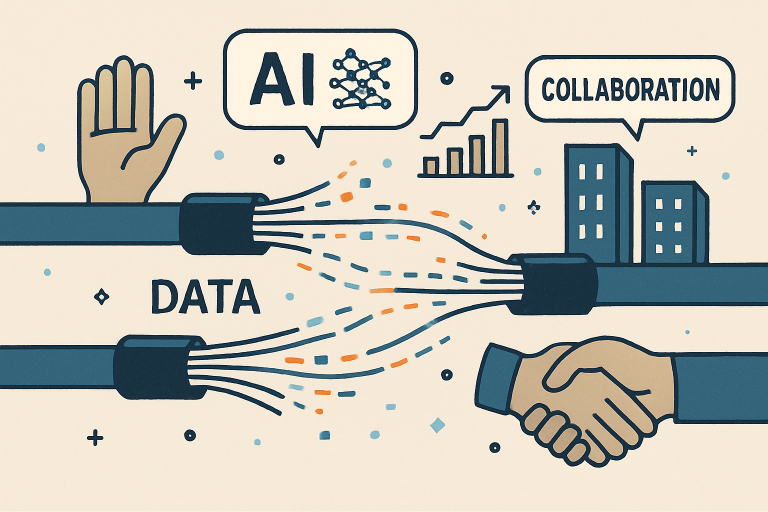
Collaboration and data sharing among industry stakeholders foster innovation and informed decision-making. Sharing anonymized data on network performance and user behavior can lead to the development of best practices and new technologies. For example, partnerships between fiber providers and AI developers have led to self-healing networks that automatically reroute traffic during outages, thereby enhancing overall resilience.
Case Study: AI-Augmented Fault Localization in Rural Fiber Networks
In rural areas, maintaining fiber networks poses unique challenges due to limited resources and vast geographic coverage. A recent study introduced an AI-augmented OTDR fault localization framework designed to enhance the resilience of rural fiber networks in the United States. By integrating machine learning with traditional OTDR analysis, the system improved fault detection accuracy and reduced false positives, offering a scalable solution for proactive network maintenance.
Future Trends in Data-Driven Fiber Network Infrastructure
The future of fiber network infrastructure lies in the continued integration of data analytics and AI. Emerging trends include the development of self-optimizing networks that adapt to changing conditions in real-time and the use of predictive analytics to anticipate and mitigate potential issues. Additionally, as data consumption grows, the demand for advanced fiber technologies capable of higher transmission speeds and capacities will increase, necessitating ongoing innovation and investment.
Conclusion
Embracing data-driven decision-making is essential to advancing fiber network infrastructure. By leveraging data analytics, AI, and collaborative practices, the industry can enhance network efficiency, reliability, and scalability. As technology continues to evolve, staying ahead of these trends will be crucial for meeting the ever-growing demands of the digital age.