
Table of Contents
- Understanding Wire Rope Slings
- Pre-Use Inspection
- Proper Handling and Use
- Load Capacity and Distribution
- Environmental Considerations
- Storage and Maintenance
- Training and Competency
- Conclusion
Wire rope slings are critical components in construction, manufacturing, maritime, and various heavy industries. Their design offers significant strength and flexibility, making them indispensable for lifting, rigging, and secure load handling. However, safe operation is non-negotiable—improper use or poor maintenance can quickly turn a worksite hazardous. For anyone searching for wire rope near me, it’s essential not just to source quality equipment but also to understand the best practices that keep people safe and jobs running smoothly.
The consequences of neglecting proper procedures go beyond equipment damage—they can include severe injuries or even fatalities. That’s why every industry professional and operator must be diligent in following recommended inspection routines, handling guidelines, and storage protocols, ensuring a safety-first culture that protects both workers and assets.
Wire rope slings are subject to heavy loads, environmental stresses, and routine wear and tear. Recognizing this, regulatory bodies such as OSHA have outlined comprehensive standards to guide all aspects of their use. Incorporating these guidelines into daily operations reduces risk, while regular training helps reinforce safe behavior and raises awareness of common hazards.
As demand for heavier, more complex lifts grows, ongoing education and adherence to the latest safety standards are vital. It is not enough to rely solely on initial training—organizations should cultivate a culture in which every team member knows the signs of damage and the appropriate responses in an emergency. Invest in prevention to safeguard your team and maximize the useful lifespan of your investments.
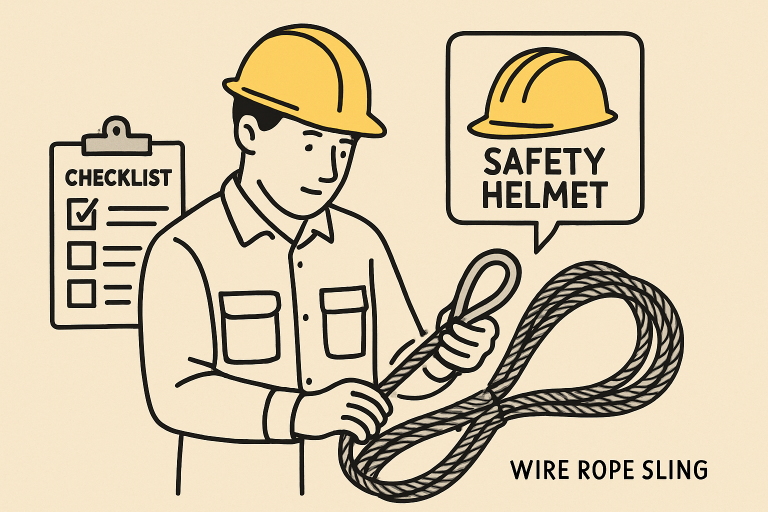
Understanding Wire Rope Slings
Wire rope slings are made by twisting several strands of metal wire together into a helical structure. This configuration offers not only substantial load-bearing capacity but also much-needed flexibility during lifting operations. Wire rope slings come in various types, such as single-leg, multi-leg bridle, basket, and choker slings, allowing them to be used in a wide range of lifting configurations. According to OSHA guidance, provide essential best practices for selecting and maintaining these slings in industrial settings.
Selecting the appropriate sling type depends on the nature of the lift, the load’s weight, and the specific working environment. Factors such as abrasion, fatigue, and exposure to harsh elements must be considered, as they can significantly affect the integrity and longevity of the wire rope.
Pre-Use Inspection
A comprehensive pre-use inspection is the foundation of wire rope sling safety. Before every operation, slings should be checked for visible signs of wear, deterioration, or damage. Common issues include:
- Broken wires: Remove the sling from service if it has ten or more broken wires in one rope lay, or five or more broken wires in a single strand within one rope lay.
- Distortions: Look for kinking, birdcage formations, or severe bends that compromise strength.
- Corrosion: Rust or pitting can weaken slings, especially in moist or chemically harsh environments.
- Damaged end fittings: Inspect hooks and eyes for cracks, deformation, or wear that can interfere with secure lifting.
Address all identified issues before proceeding. Damaged slings should be tagged and removed from use immediately.
Proper Handling and Use
Safe handling practices preserve sling integrity and prevent workplace accidents. Key recommendations include:
- Never drag slings across abrasive surfaces or concrete.
- Avoid tying knots or subjecting the rope to sharp bends, which can damage individual wires and weaken the sling.
- Use edge protectors or padding around corners to prevent the rope from cutting or crushing under load.
- Ensure that every lift is stable and balanced by adjusting attachment points and sling lengths appropriately.
Improper techniques, especially with heavy materials or in dynamic settings, can rapidly escalate to sling failure or accidents.
Load Capacity and Distribution
One of the principal causes of sling failure is exceeding the manufacturer’s load limits. Always refer to the sling’s identification tag and consult current load charts before a lift. Proper load distribution is essential—multi-leg slings must be rigged to distribute the load among all legs evenly.
- Double-check lifting angles: the more vertical each leg, the higher the safe working load; flatter angles increase the load on each leg.
- Avoid shock loading, which occurs when a load is suddenly applied; even brief overstressing can permanently damage a sling.
Incorrect calculation or rushed judgment can compromise the entire lift—when in doubt, consult a qualified engineer or supervisor.
Environmental Considerations
Working conditions can dramatically impact sling performance. Follow these practices for maximum safety:
- Temperature: Never use wire rope slings in environments below -40°F or above 400°F, as extreme heat or cold can reduce wire rope strength and flexibility.
- Chemical exposure: Keep wire ropes away from corrosive chemicals, acids, and alkalis whenever possible. While galvanized ropes are more resistant, prolonged exposure is still hazardous.
- Moisture: Store and use slings away from excessive moisture to minimize rust and pitting.
Storage and Maintenance
Correct storage and ongoing maintenance will significantly extend the useful life of your slings. Store wire rope slings in a dry, ventilated area off the floor on designated racks. Avoid heaping or tangling slings, as this can lead to bends or kinks. Periodic lubrication helps prevent rust, especially in humid environments or when the wire rope is repeatedly flexed.
Do not store slings in direct sunlight or near heat sources, as UV radiation and temperature fluctuations can weaken wire materials. Schedule regular maintenance inspections and keep thorough logs of all repairs or decommissioning activities.
Training and Competency
Only qualified, trained personnel should handle wire rope slings. Proper training includes classroom instruction, hands-on practice, and regular refreshers to keep everyone up to date on new procedures and regulatory changes. Ensure staff can recognize common defects, follow safe rigging protocols, and respond appropriately to emergencies.
Conclusion
Pursuing and maintaining safe practices with wire rope slings is non-negotiable for any commercial or industrial operation. Prioritize regular inspection, correct handling, environmental awareness, and ongoing education. Developing a safety-first mindset throughout your team ensures reliable, productive lifting operations and minimizes the risk of costly, potentially tragic incidents.