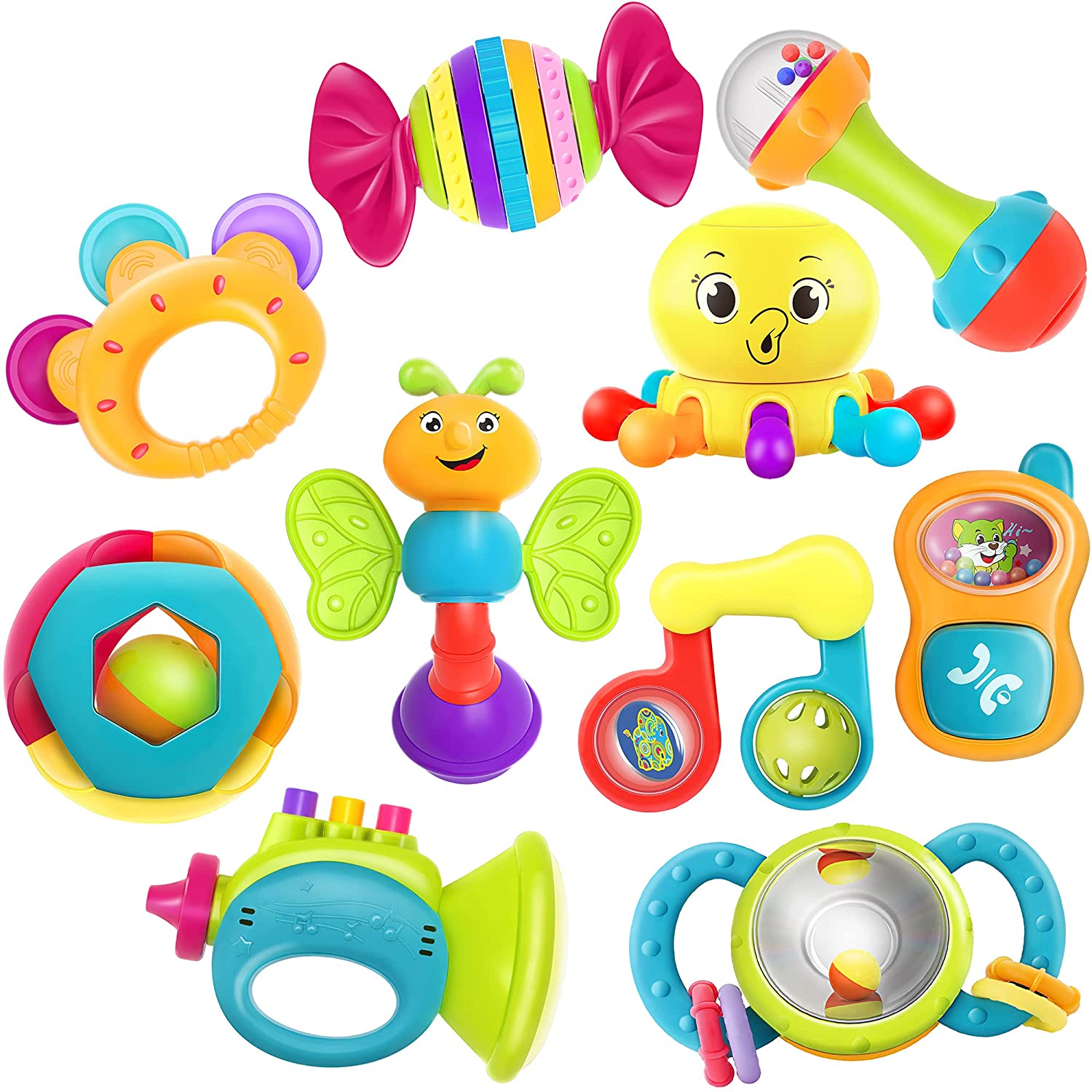
For parents and caregivers, selecting the right baby toys is not merely about entertainment. These playthings play a pivotal role in aiding infants’ development during their critical formative months. It is a well-documented fact that play is an essential component in a baby’s learning process, providing not just amusement but also fostering cognitive, physical, emotional, and social growth.
Cognitive Development and Play
Babies are born ready to explore, and with each touch, taste, and smell, they learn about the world around them. Toys with contrasting colours and various textures stimulate an infant’s visual and tactile senses, leading to better spatial awareness and comprehension of different shapes and patterns. Cognitive skills are significantly honed through the use of simple puzzles, shape sorters, and toys that require babies to match or identify different items, paving the way for problem-solving abilities and logical thinking.
Physical Growth and Motor Skills
Physical development in babies is often marked by milestones such as grasping, sitting up, crawling, and eventually walking. Toys that encourage movement, like soft balls for rolling and chasing, assist in the development of gross motor skills. Smaller toys designed for gripping and squeezing improve fine motor skills and hand-eye coordination. These fundamental skills are vital for later tasks such as writing, dressing oneself, and participating in sports.
Emotional Development Through Play
Emotions play a significant role in everyone’s life, and understanding and managing these emotions starts early. Baby toys that require a response to actions such as laughter from a squeeze doll, or a light-up feature when buttons are pressed, can teach cause-and-effect relationships and early sequences of action and reaction. Comfort toys, often in the form of soft stuffed animals or blankets, provide infants with a sense of security and comfort, helping them to manage their feelings and become more independent.
Social Skills and Interactive Play
Interactive play with caregivers and other children encourages babies to develop social skills. It encourages them to understand the concept of taking turns, sharing, and cooperating. Toys that are meant to be used in a group setting can promote these social interactions, which are crucial for forming relationships and building communication skills.
Choosing Age-Appropriate Toys
It is essential that the toys chosen are appropriate for the baby’s age and development stage. Newborns, for instance, are more interested in toys with high contrast colours and simple melodies, whereas older babies may prefer toys that they can manipulate and interact with more dynamically. Understanding the stages of development and the types of toys that are beneficial at each stage can help parents invest wisely in their child’s playful education.
The Safety Aspect of Baby Toys
Safety is paramount when considering toys for young children. Toys should be constructed from non-toxic materials and have no small parts that can be easily swallowed or inhaled. The manufacturing standards must adhere to the regulations put forth by safety watchdogs to ensure they are safe for chewing and do not pose any choking hazards.
Technology in Baby Toys
While traditional toys continue to be vital, in the digital age, there has been an influx of tech-savvy toys. These can range from educational apps on tablets to interactive electronic toys that sing and speak. When used appropriately, these technological toys can complement the learning experience, although they should not replace the value of tactile, traditional play that engages multiple senses.
The Role of Parents and Caregivers in Play
While toys play a critical role, the engagement of parents and caregivers in playtime is equally crucial. Reading to a child, for example, has been shown to have significant impacts on language development and literacy skills. Play is a time for bonding, learning, and creating lifelong memories.
Conclusion
The bottom line is that the earliest years of a child’s life are indeed formative. During these years, the foundations for thinking, behaviours, and emotions are established. Baby toys, therefore, are more than mere amusements; they are tools that foster babies’ development in intricate and profound ways. By choosing the right toys, parents and caregivers can provide their infants with a strong start in life, combining development with the joy of play.
Final Thoughts
To sum up, the thoughtful selection of baby toys that stimulate and nurture development is paramount. These playthings lay the groundwork for a baby’s future by boosting their cognitive, physical, emotional, and social development. Seeing a baby’s growth as they interact with their toys is not only rewarding but also indicative of their evolving understanding and capabilities. As a conduit to a healthy developmental journey, the play is instrumental and undeniably central to a child’s formative years.
In conclusion, investing time and consideration into choosing appropriate toys is an investment in a child’s future. The world of baby toys is diverse, excitingly educational, and fundamental to development, providing an essential, playful bridge to the complexities of life that lie ahead.